
SPHINX
Ancient Roman, circa 2nd Century A.D.
White marble
23 cm high
25 cm wide
16 cm deep
Provenance:
Max Klein (1904-1991), Jerusalem and Montreal, acquired prior to 1955;
Thence by descent to Elana Klein, Montreal
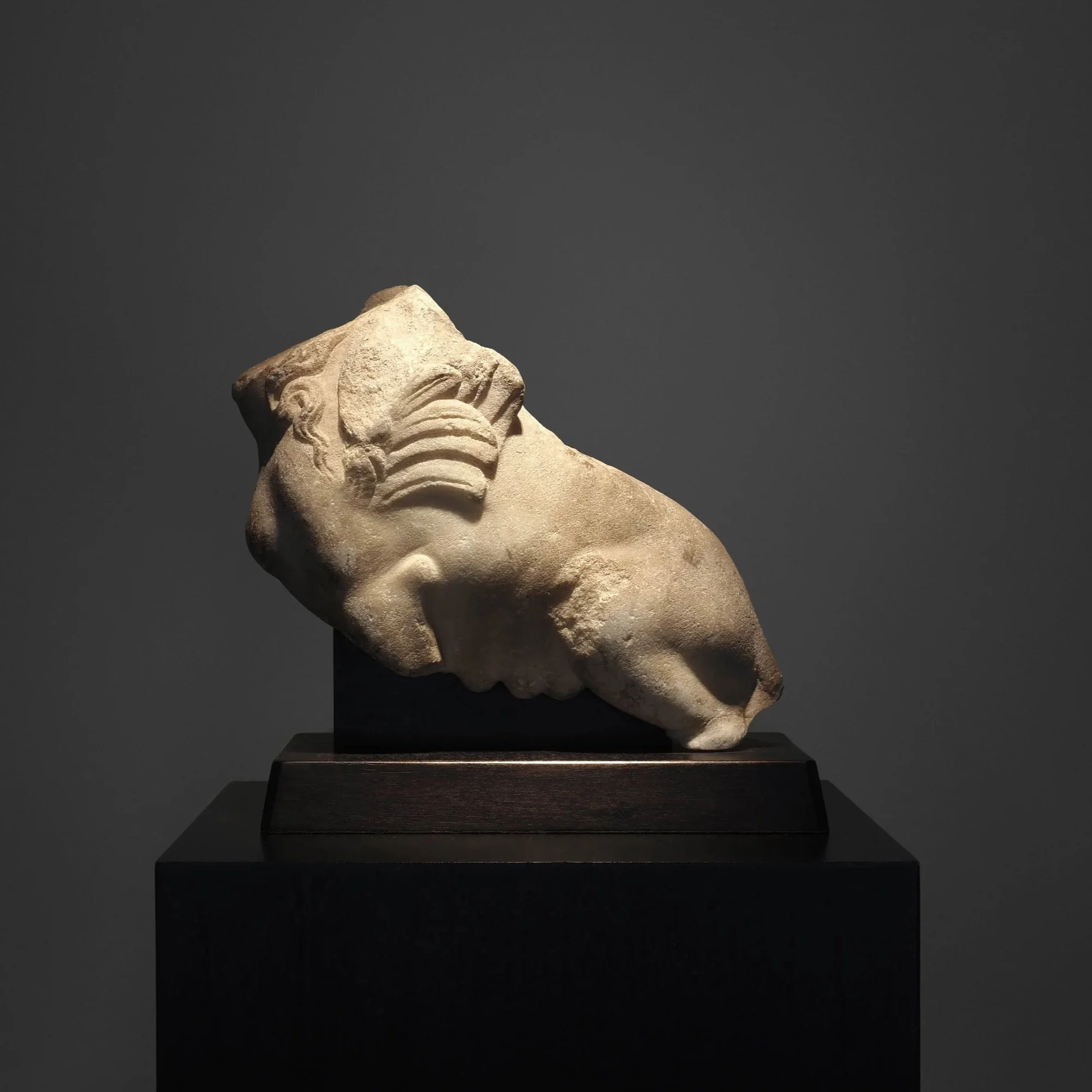
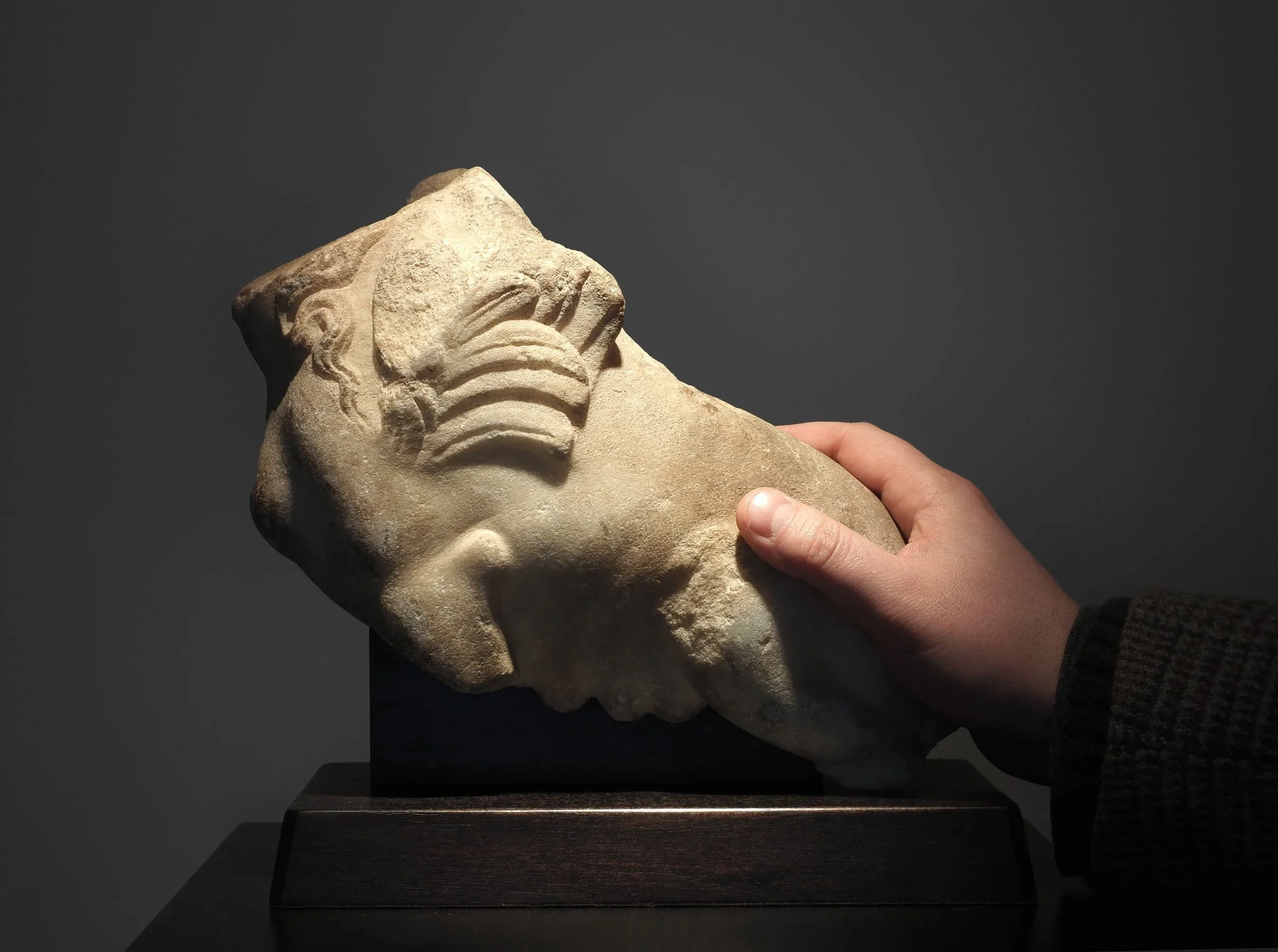
Carved in white marble, this fragment preserves the body a Sphinx and dates to around the 2nd century A.D. - a period when Roman sculptors revived and reinterpreted archaic and exotic forms with a classical refinement.
This Sphinx originated out of the sculptural tradition of ancient Egypt, which most famously reached its apogee with the colossal Great Sphinx of Giza. In Egyptian art these mythological, guardian, hybrid creatures functioned as royal symbols, fusing human intelligence with leonine strength. From the New Kingdom onward, sphinxes flanked the entrances of temples to ward off evil spirits and malevolent forces. The motif was adopted by the Greeks in the Archaic period, acquiring new mythological resonance in the Theban legend of Oedipus, before entering the Roman visual vocabulary through Hellenistic intermediaries.
In Rome, sphinxes often adorned funerary monuments, garden architecture, and decorative reliefs, particularly during the Imperial period when Egyptian cults—most notably that of Isis—enjoyed widespread popularity. The 2nd century A.D., was marked by philhellenism and antiquarian taste under emperors such as Hadrian, and therefore witnessed a flourishing of such archaic forms. This fragment thus stands as eloquent testimony to Rome’s assimilation of Egyptian iconography into a cosmopolitan imperial aesthetic.