
Buddha Torso
Ghandaran, circa 2nd / 3rd century A.D.
Grey Schist stone, on an old red marble base
20 cm wide
9 cm high
Provenance:
Private collection London, acquired in 1980 from Spink & Co, St.James’, London
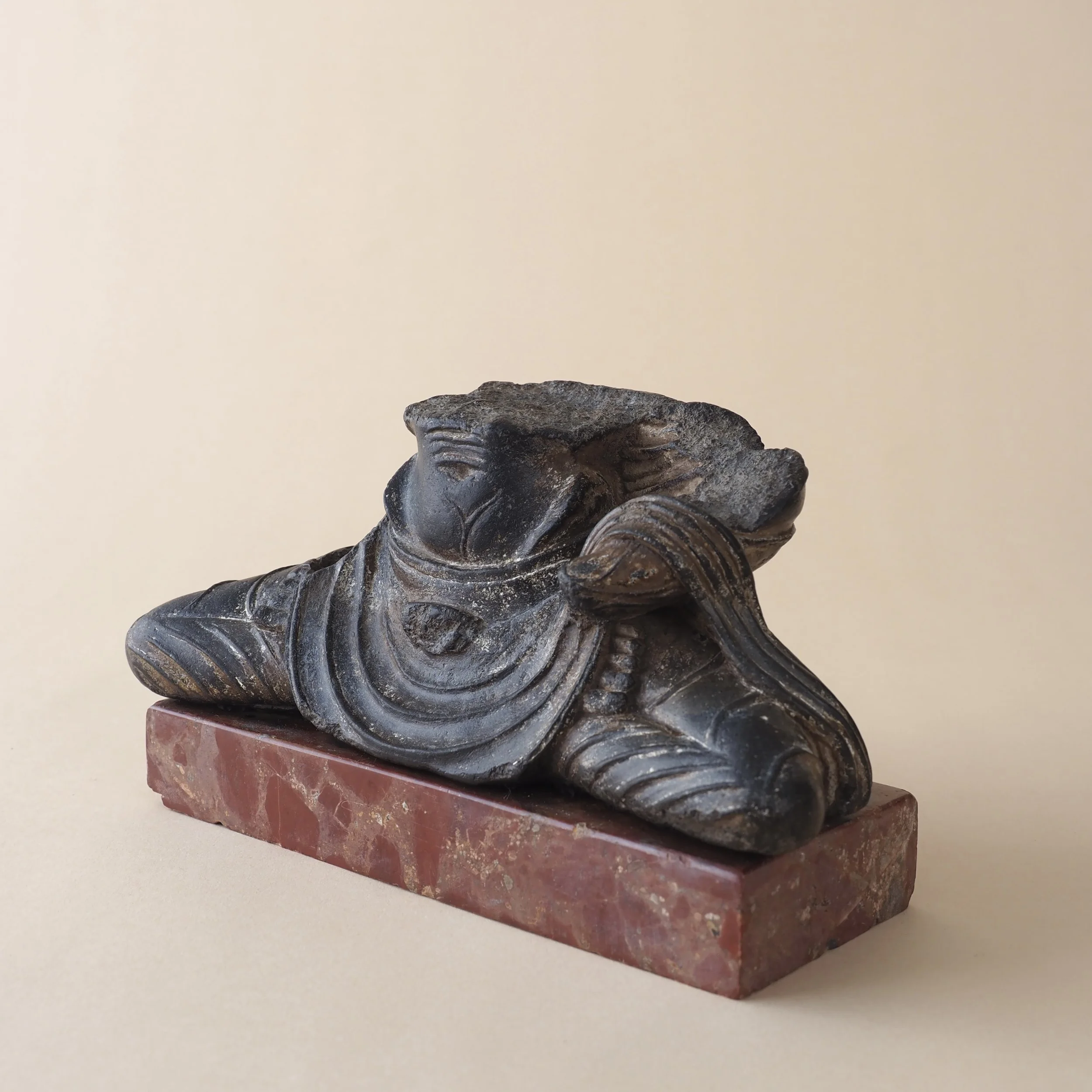
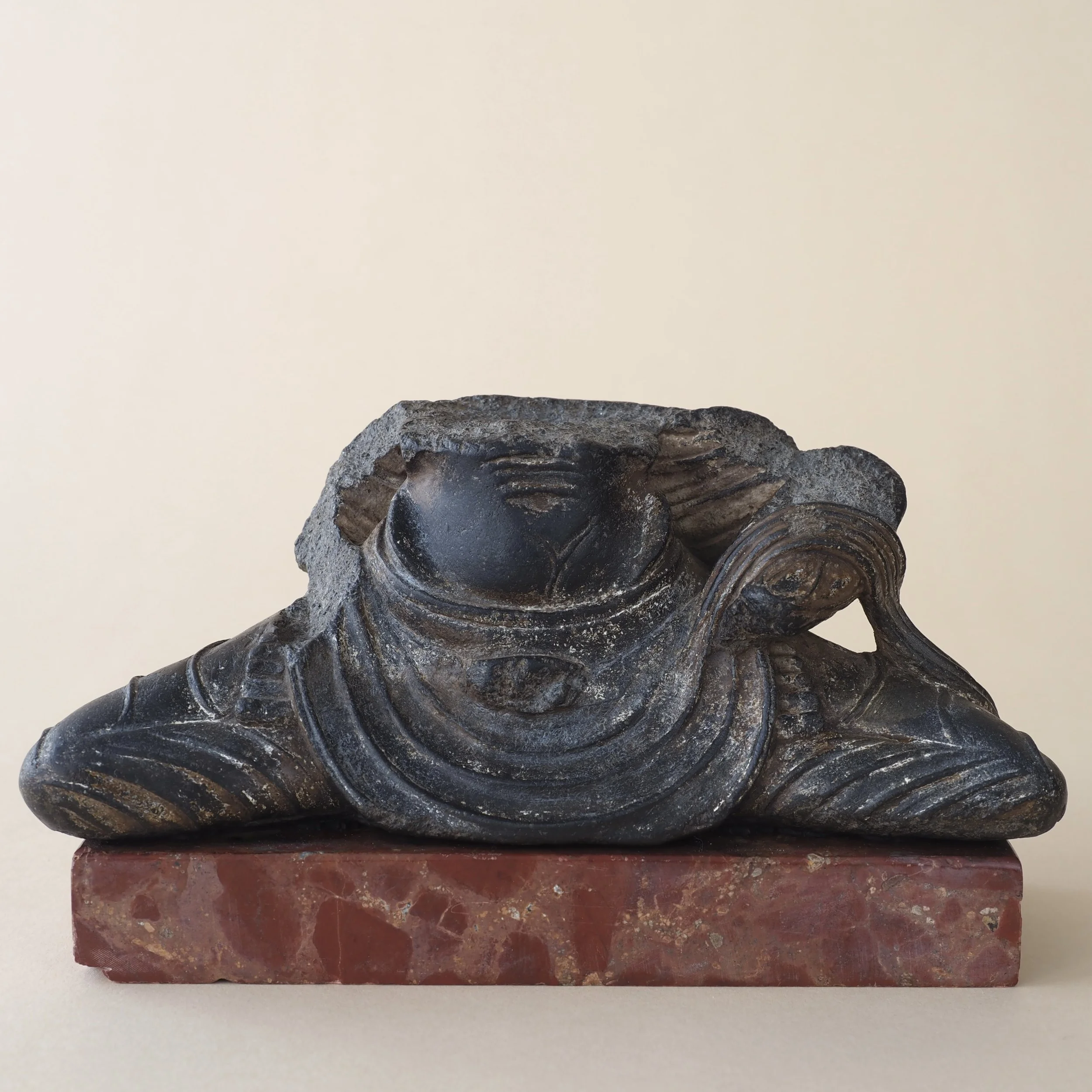
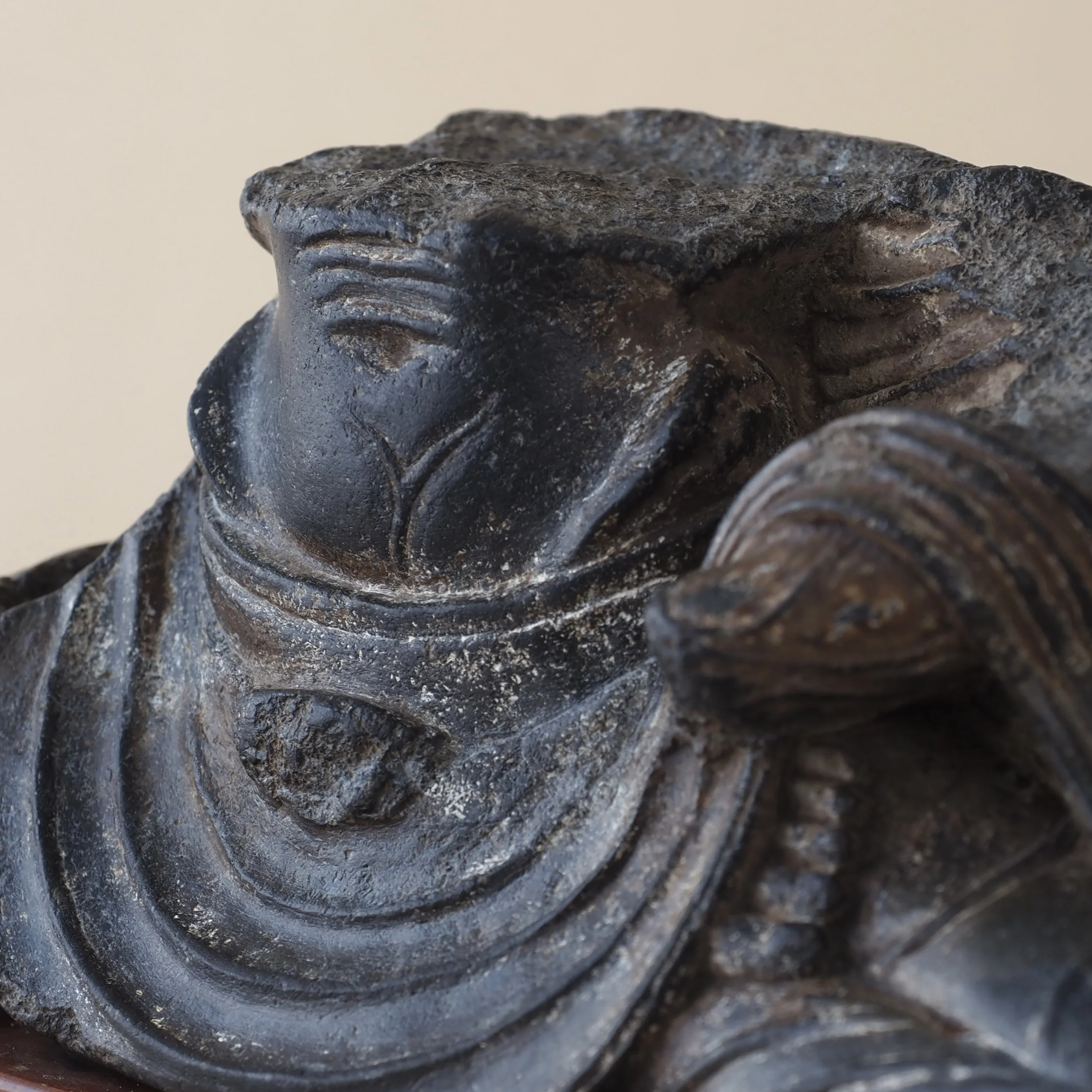
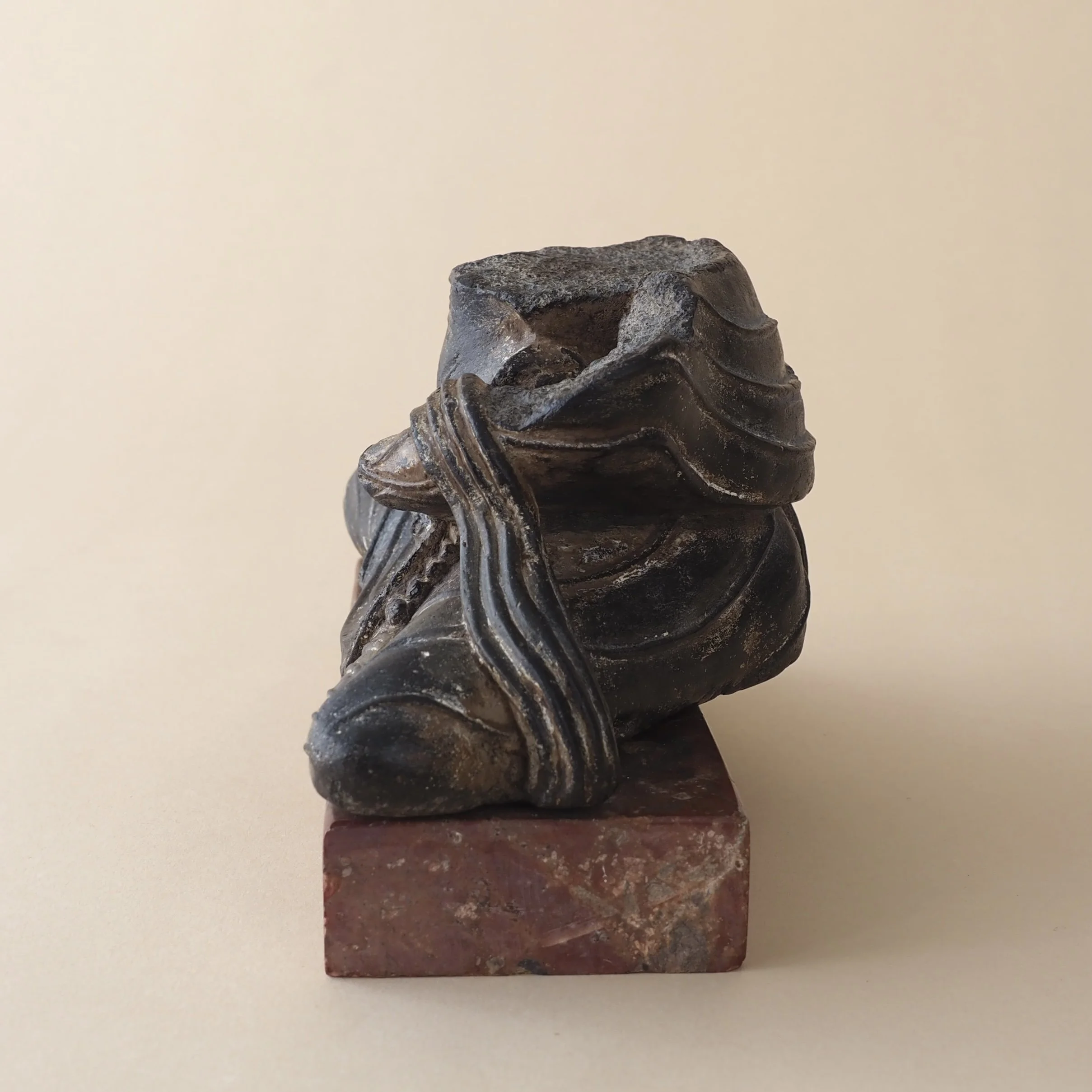
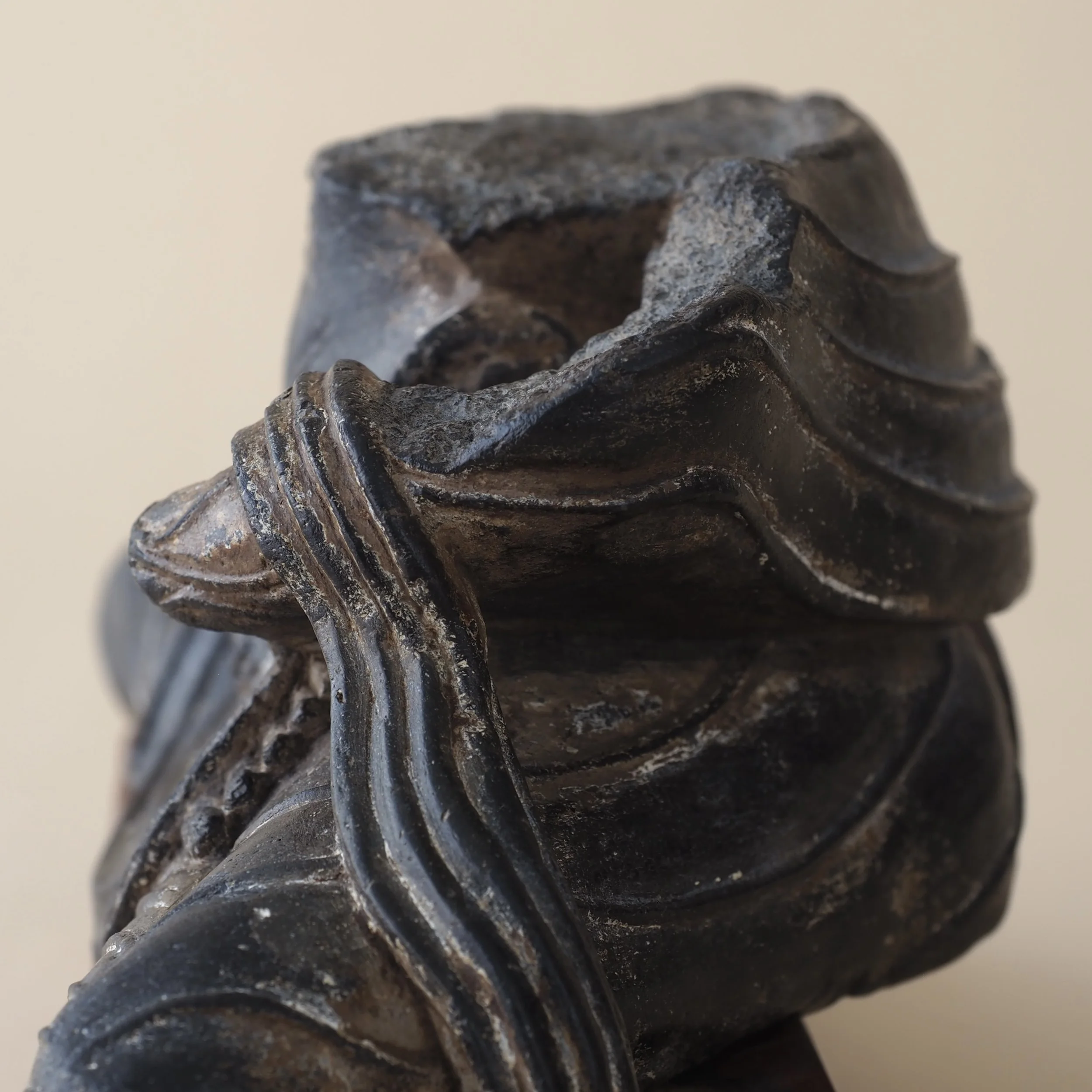
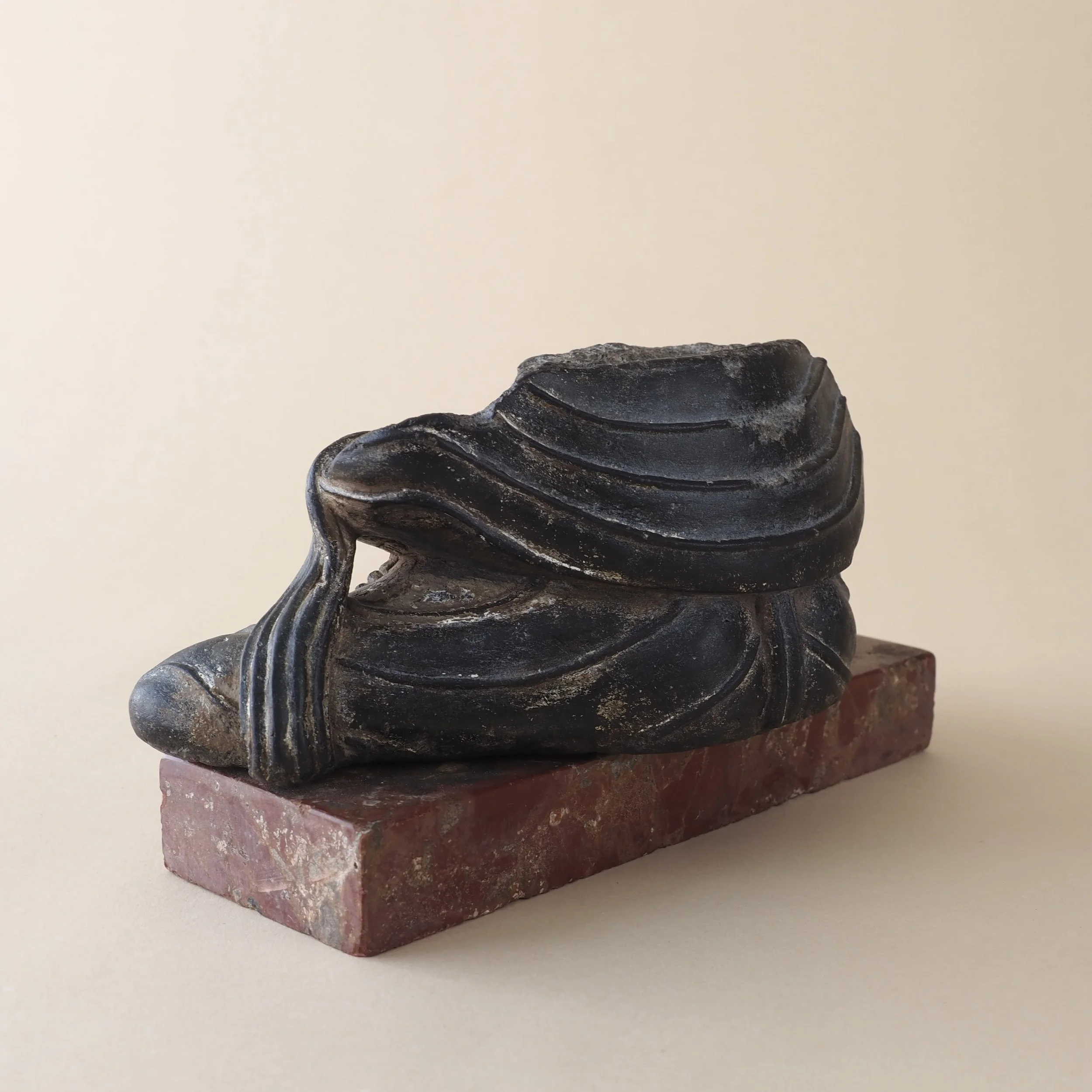
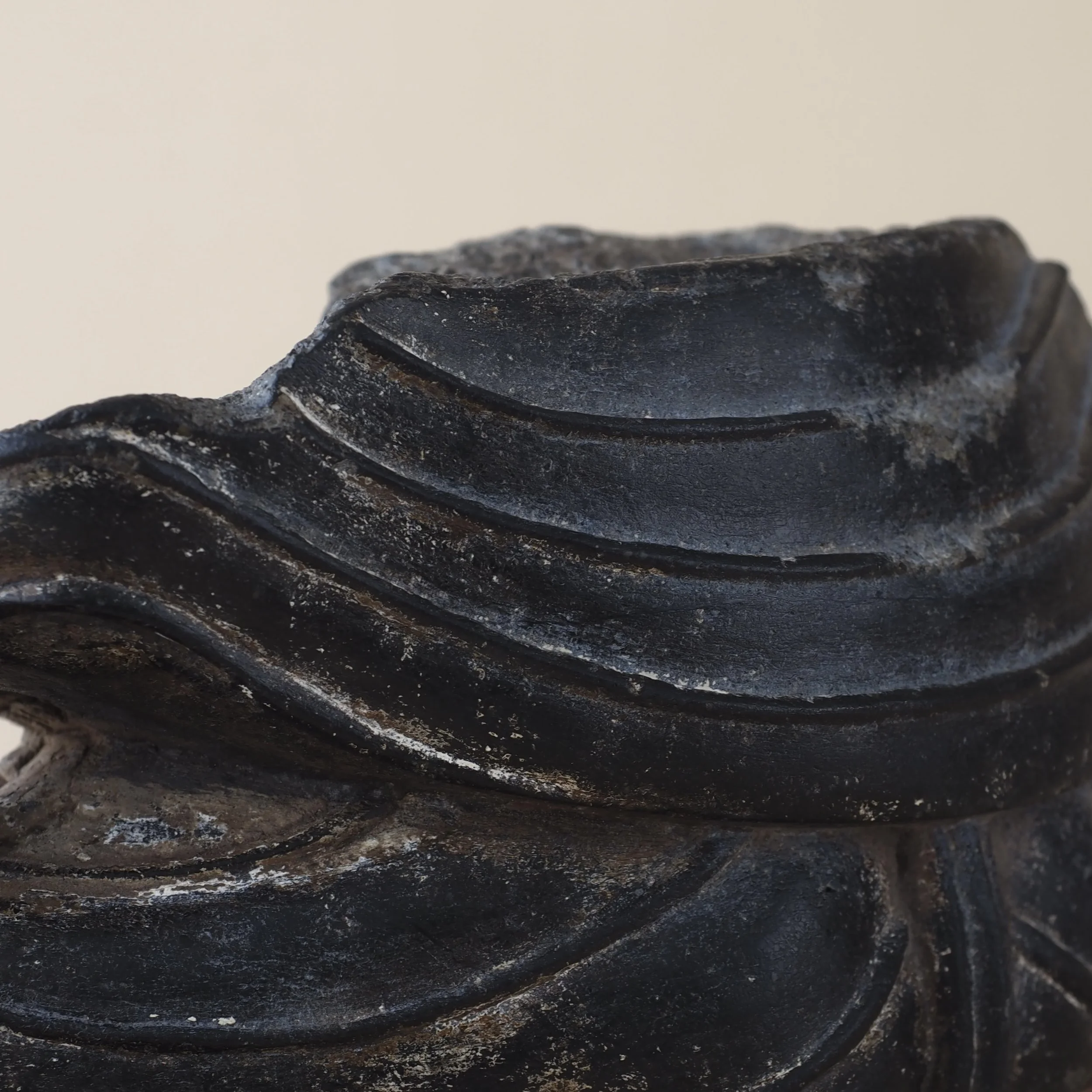
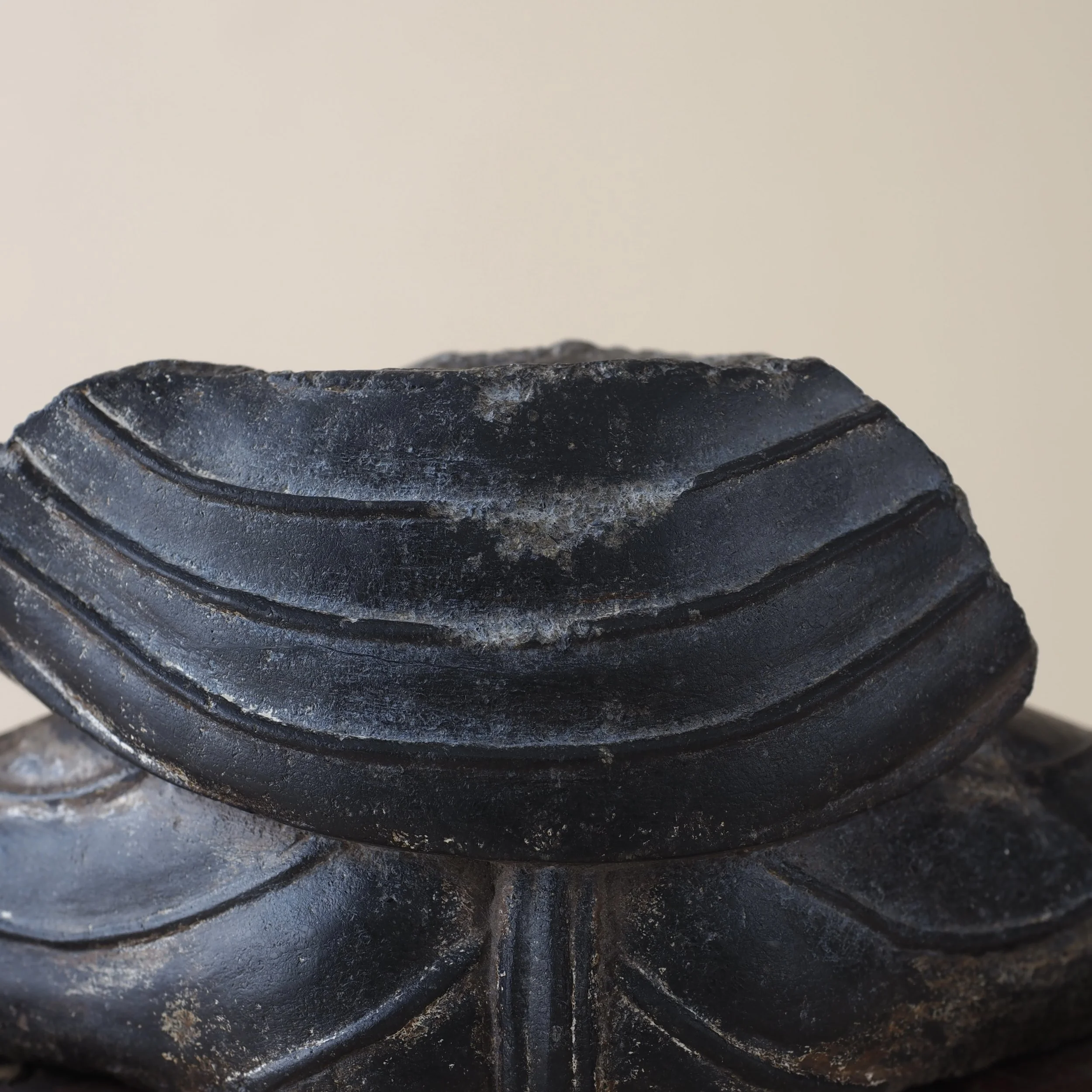
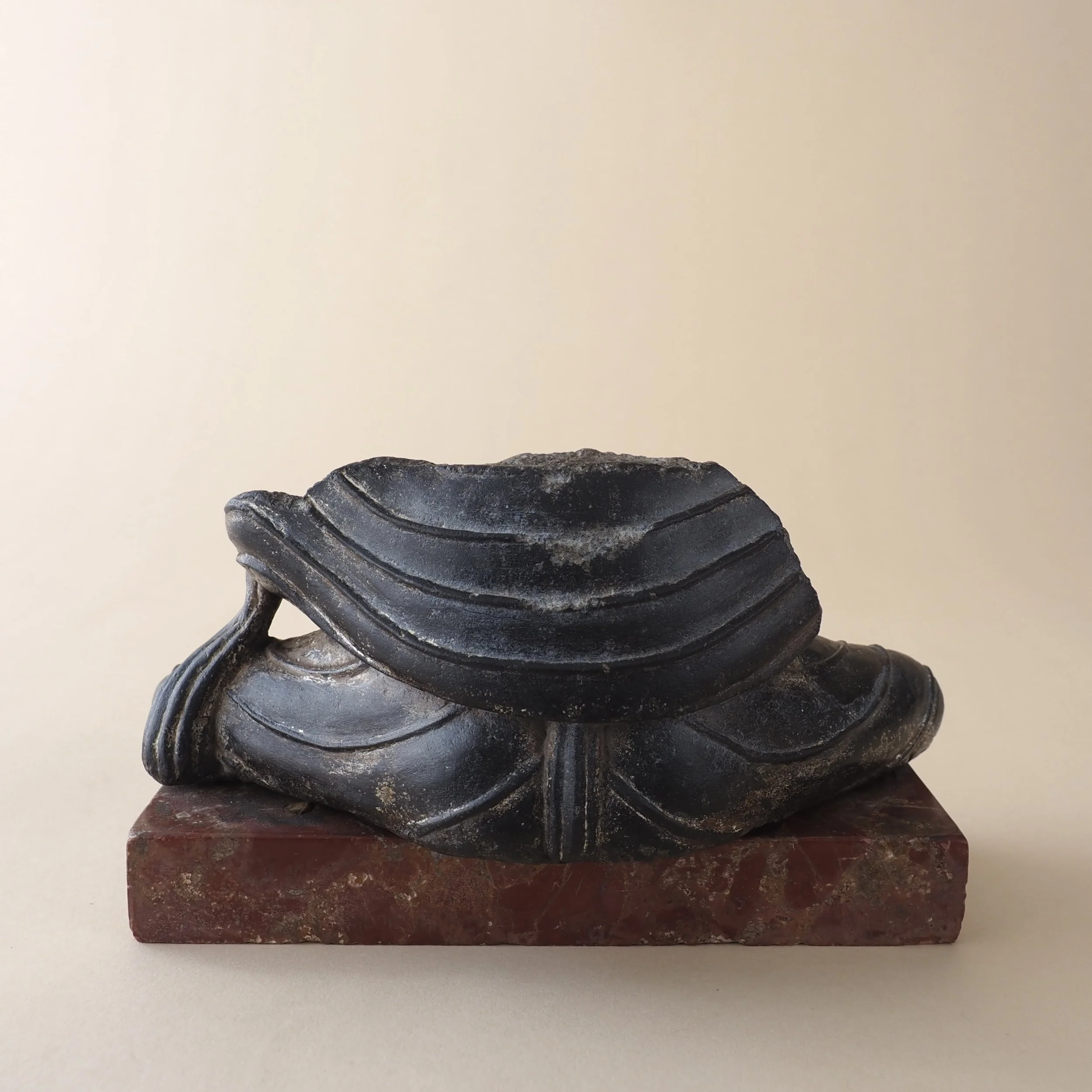
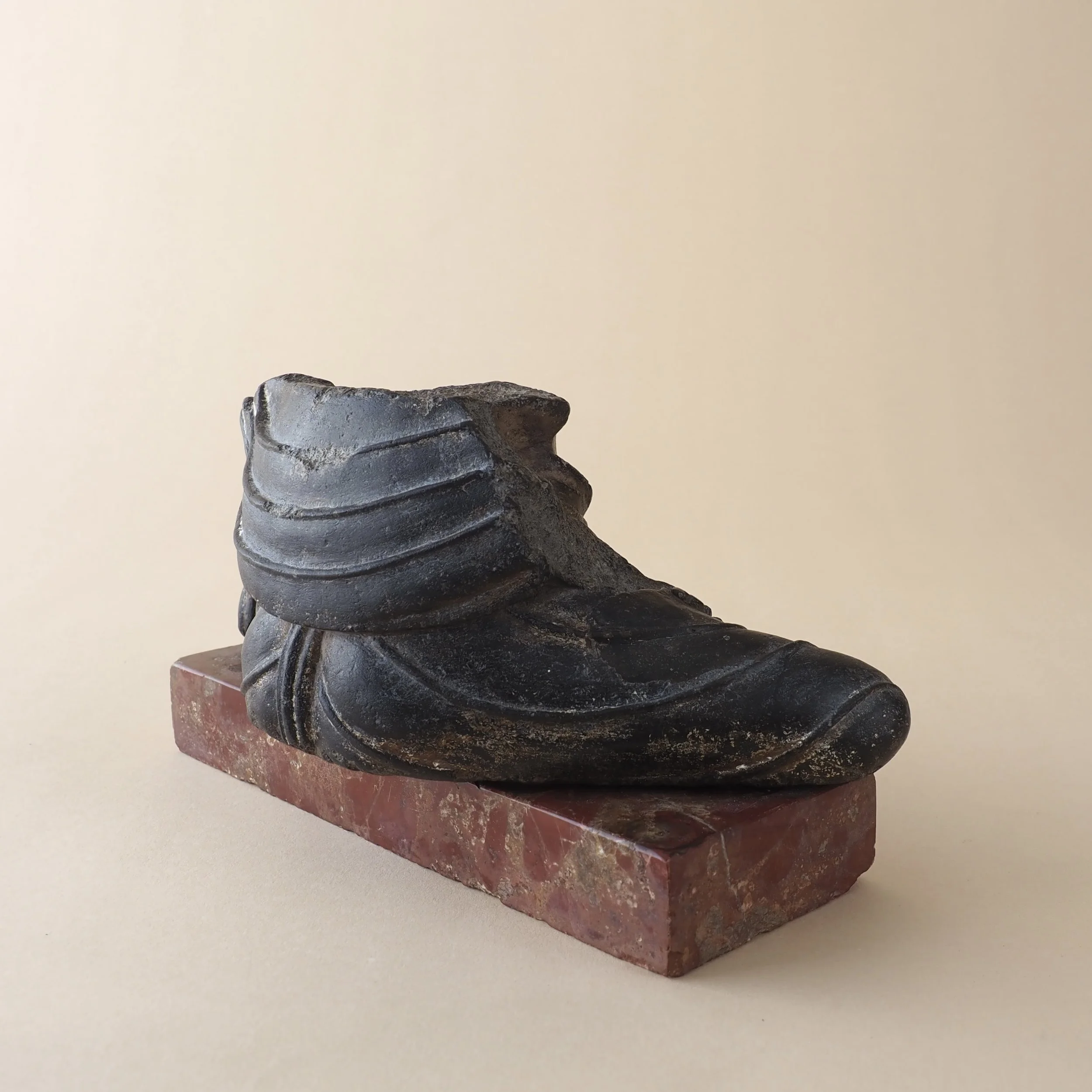
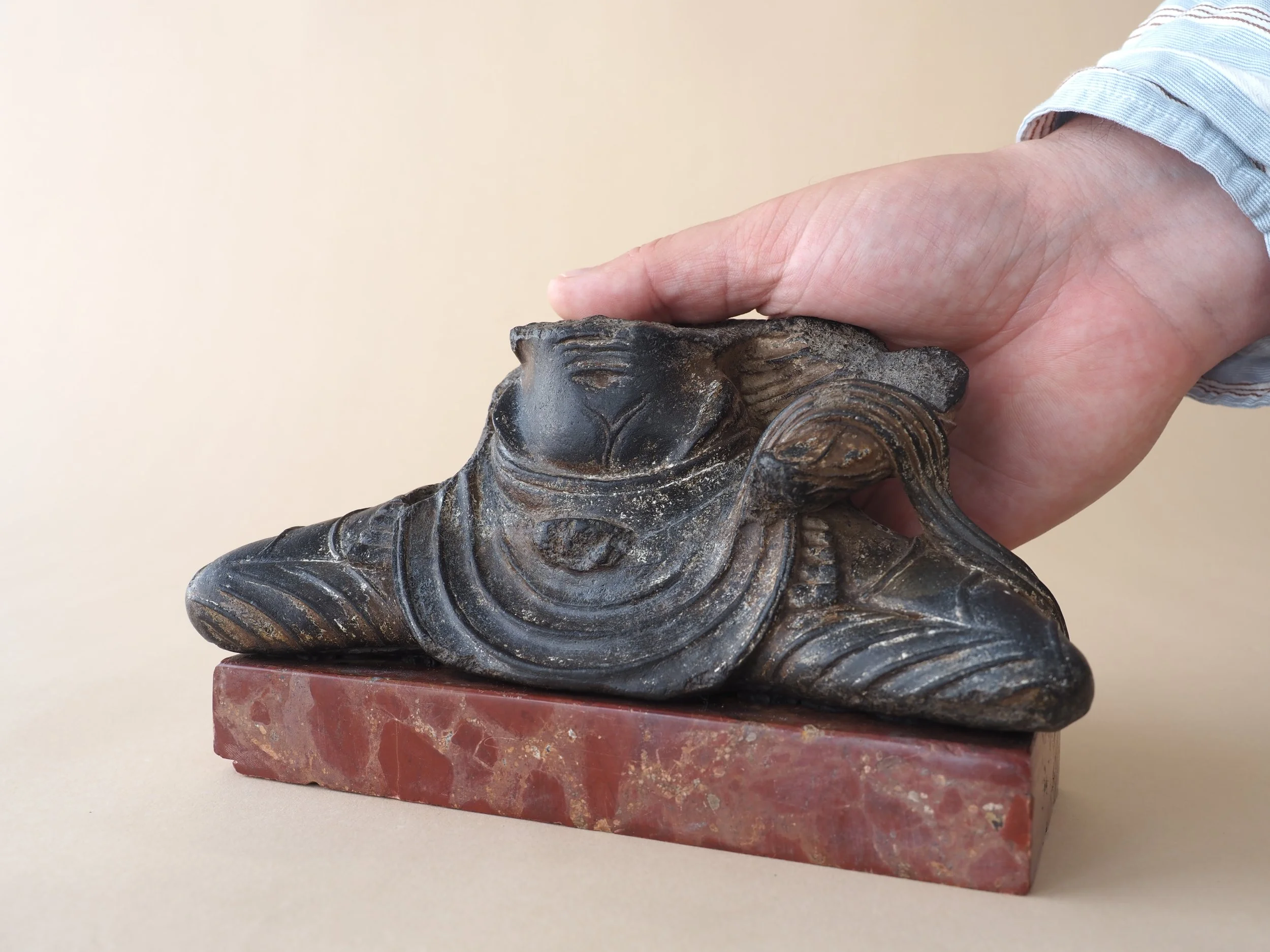
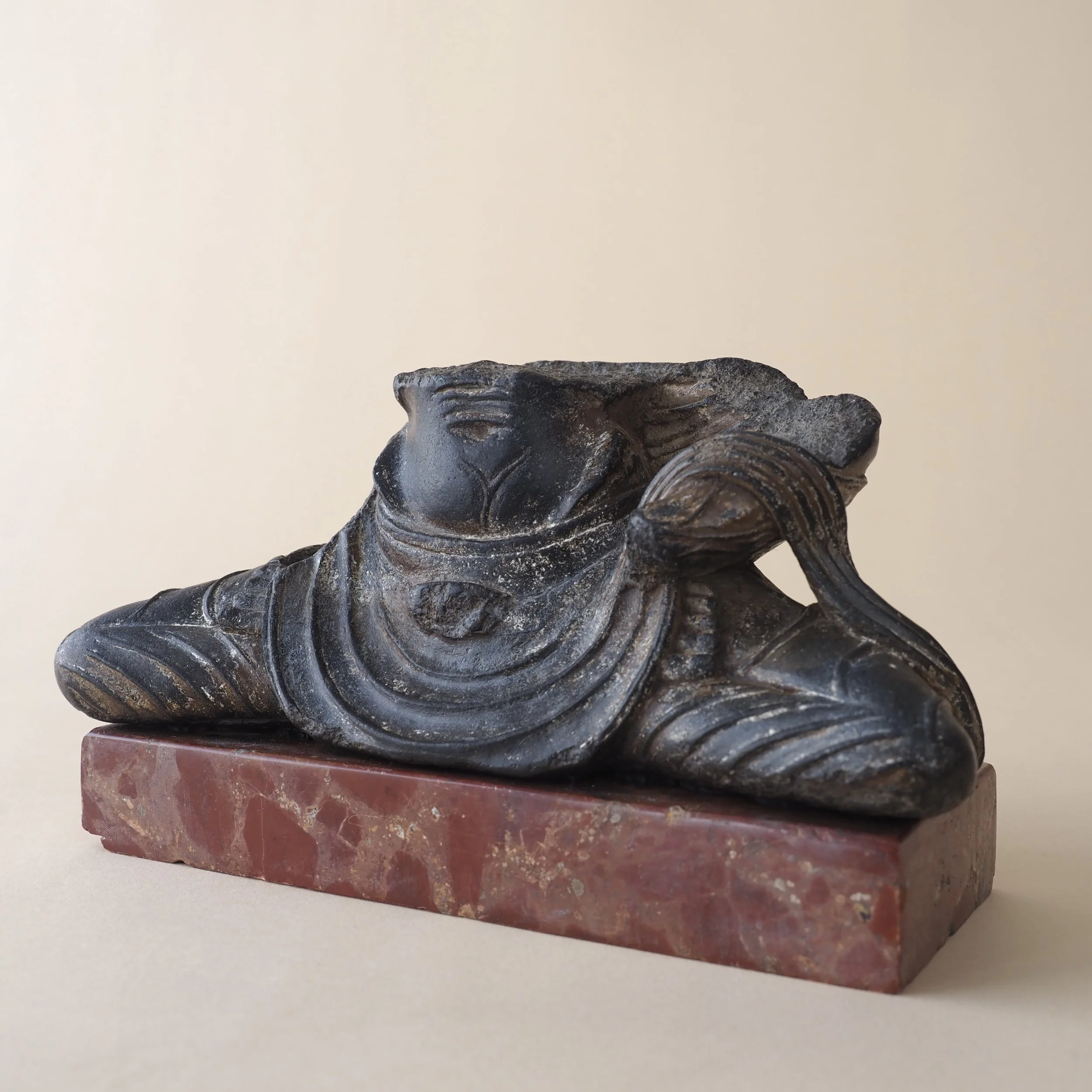
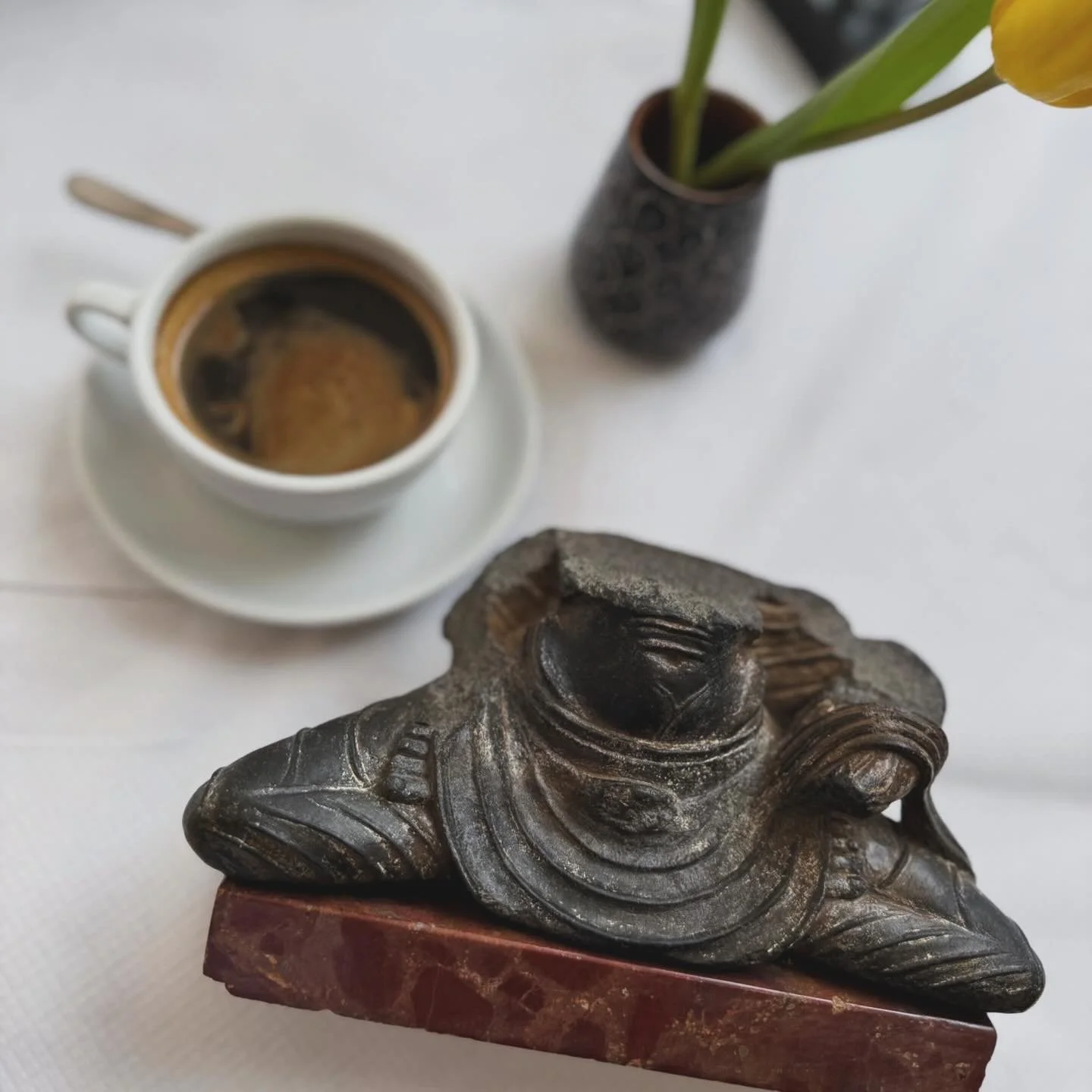
Carved from grey schist metamorphic rock, this fragmentary torso of the Buddha likely dates to around the 2nd–3rd century A.D. - a period when the Gandharan region flourished as one of the most significant centres of artistic production. The sculpture preserves the lower body of the Enlightened One, draped in the characteristic monastic robe (sanghati) which falls in rhythmic, cascading folds that cling to the body with a naturalism recalling the treatment of drapery in Greco-Roman sculpture.
Such stylistic features reflect the distinctive syncretism of Gandharan art, where Buddhist iconography was articulated through a visual language shaped by the Hellenistic sculptural tradition that was introduced to the region following the campaigns of Alexander the Great.
Works of this type once formed part of larger devotional images that adorned monastic complexes and stupas along the trade routes of the Silk Road, which served as powerful vehicles of Buddhist devotion and teaching.