
Cosmetic Vessel ‘Hinted Bird’ type
Ancient Phoenician, Eastern Mediterranean,
late 7th - early 6th century B.C.
Carved, incised and smoothed Tridacna (clam) shell
15 cm long
8 cm wide
4 cm high
Provenance:
Private collection, UK (acquired before 1983)
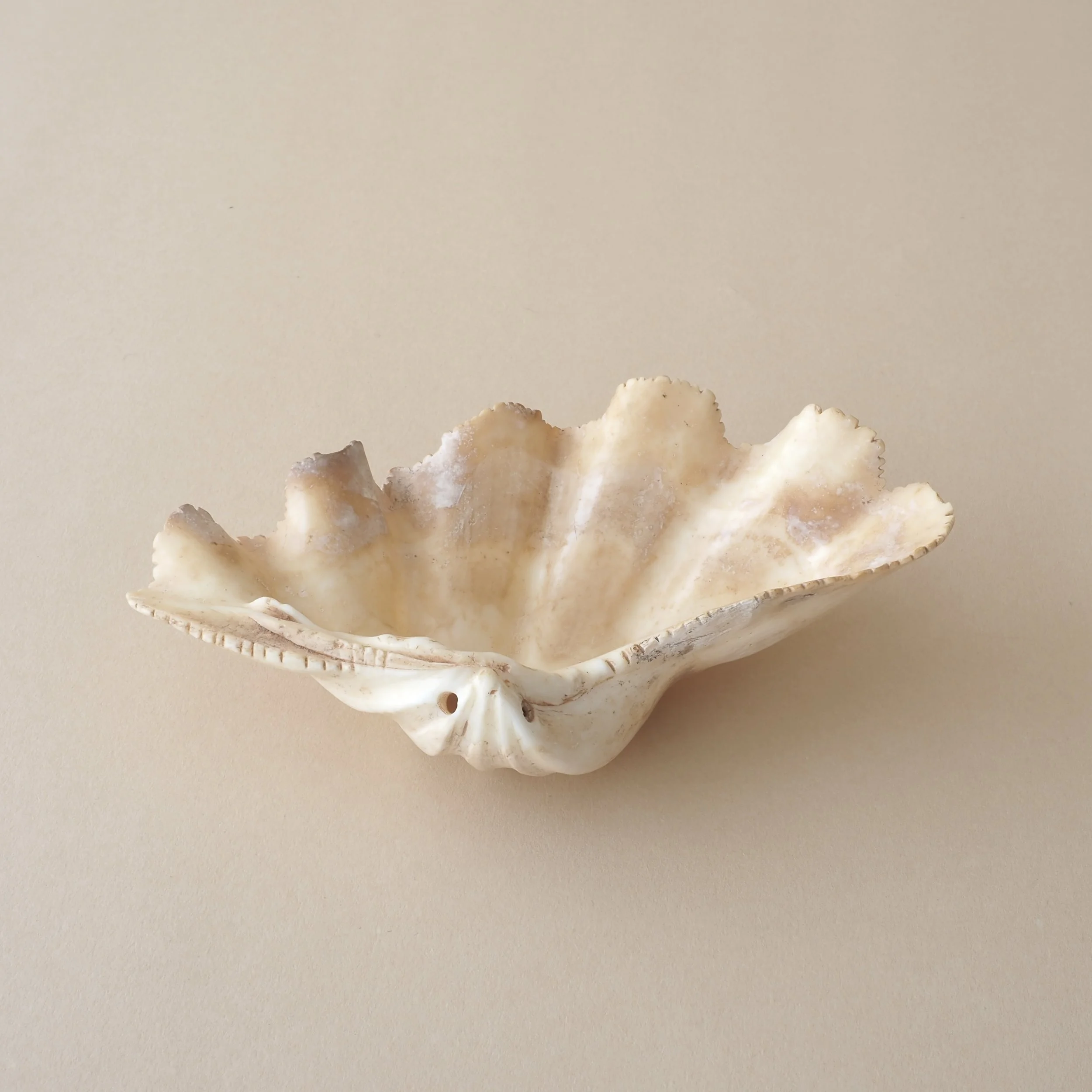
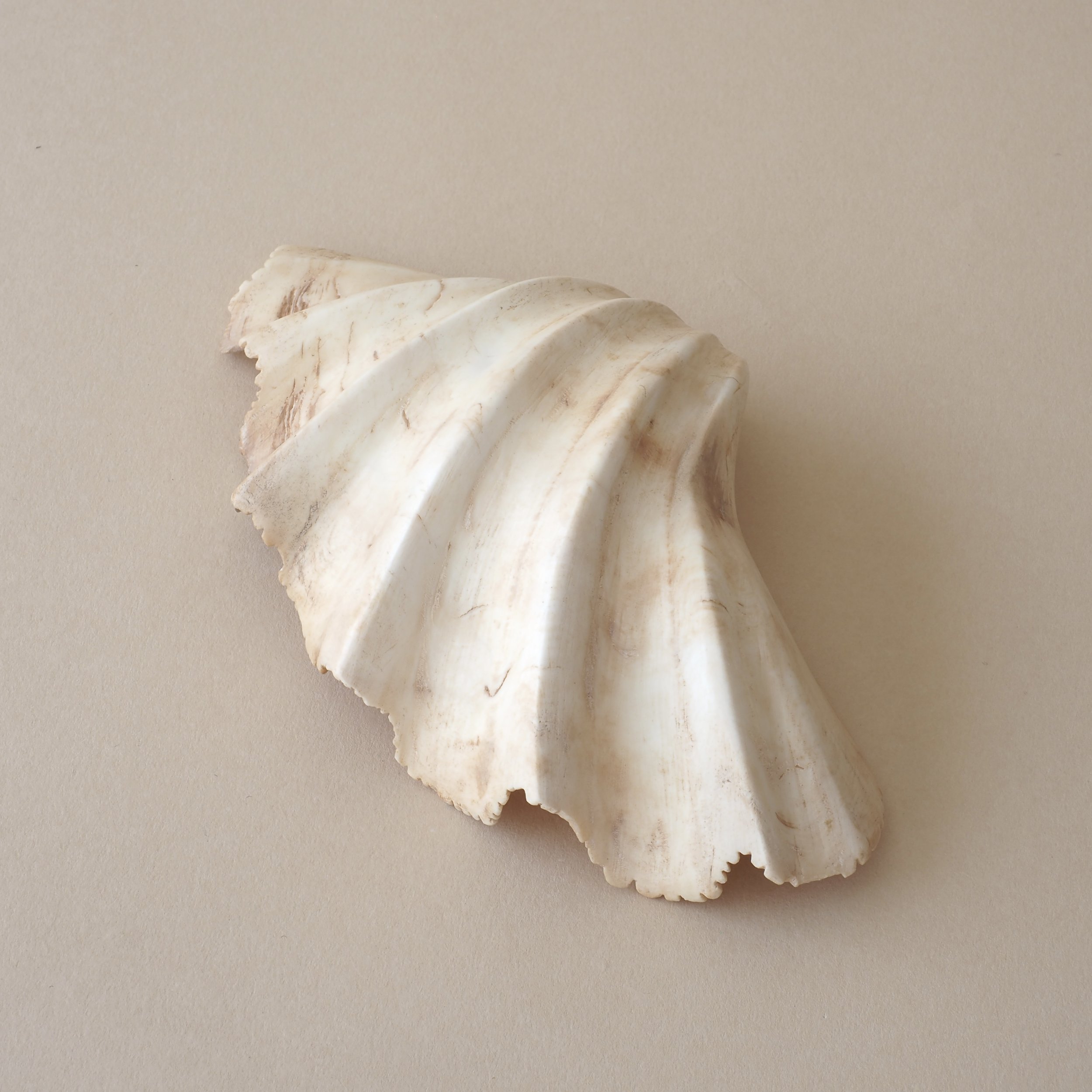
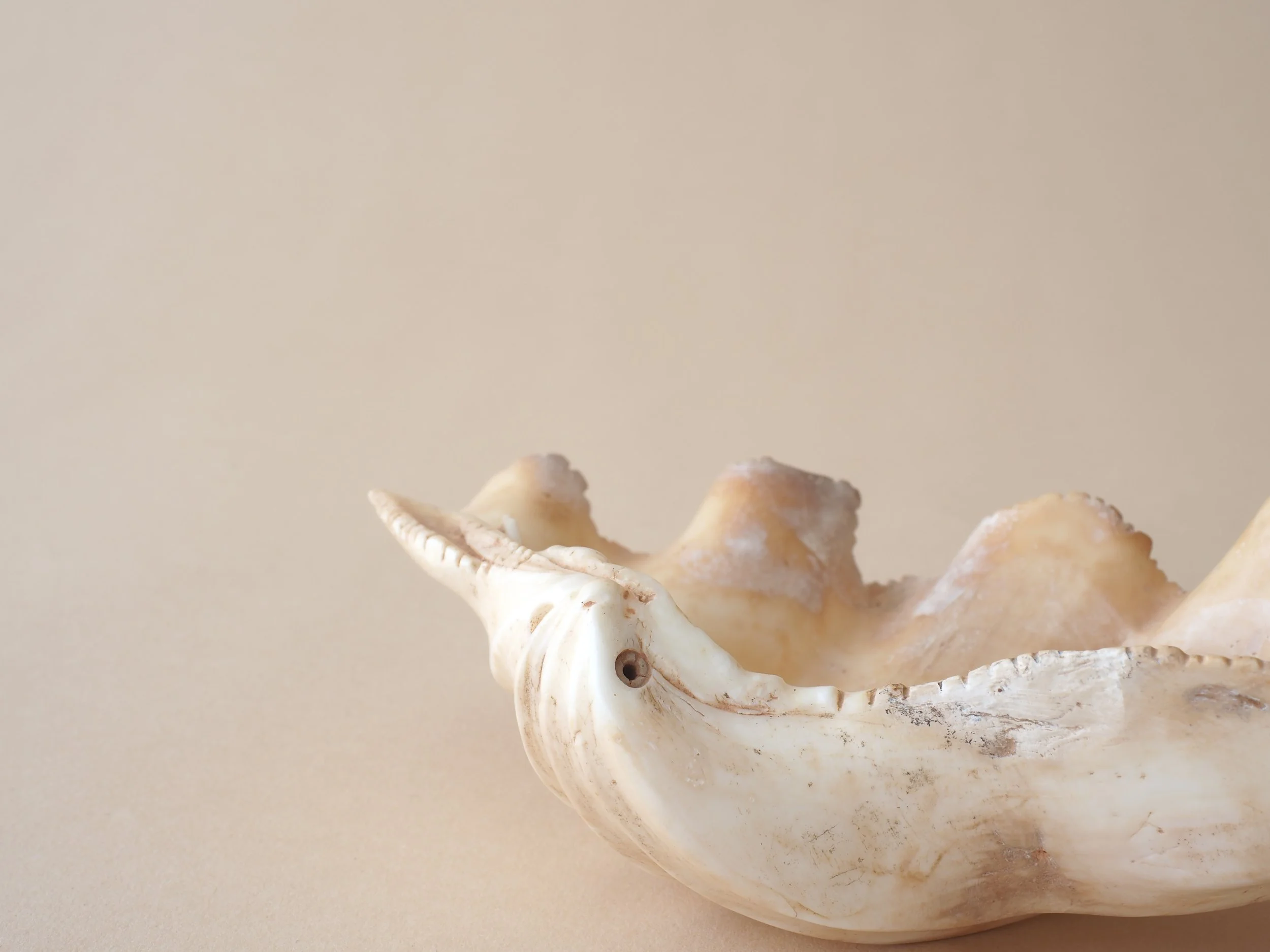
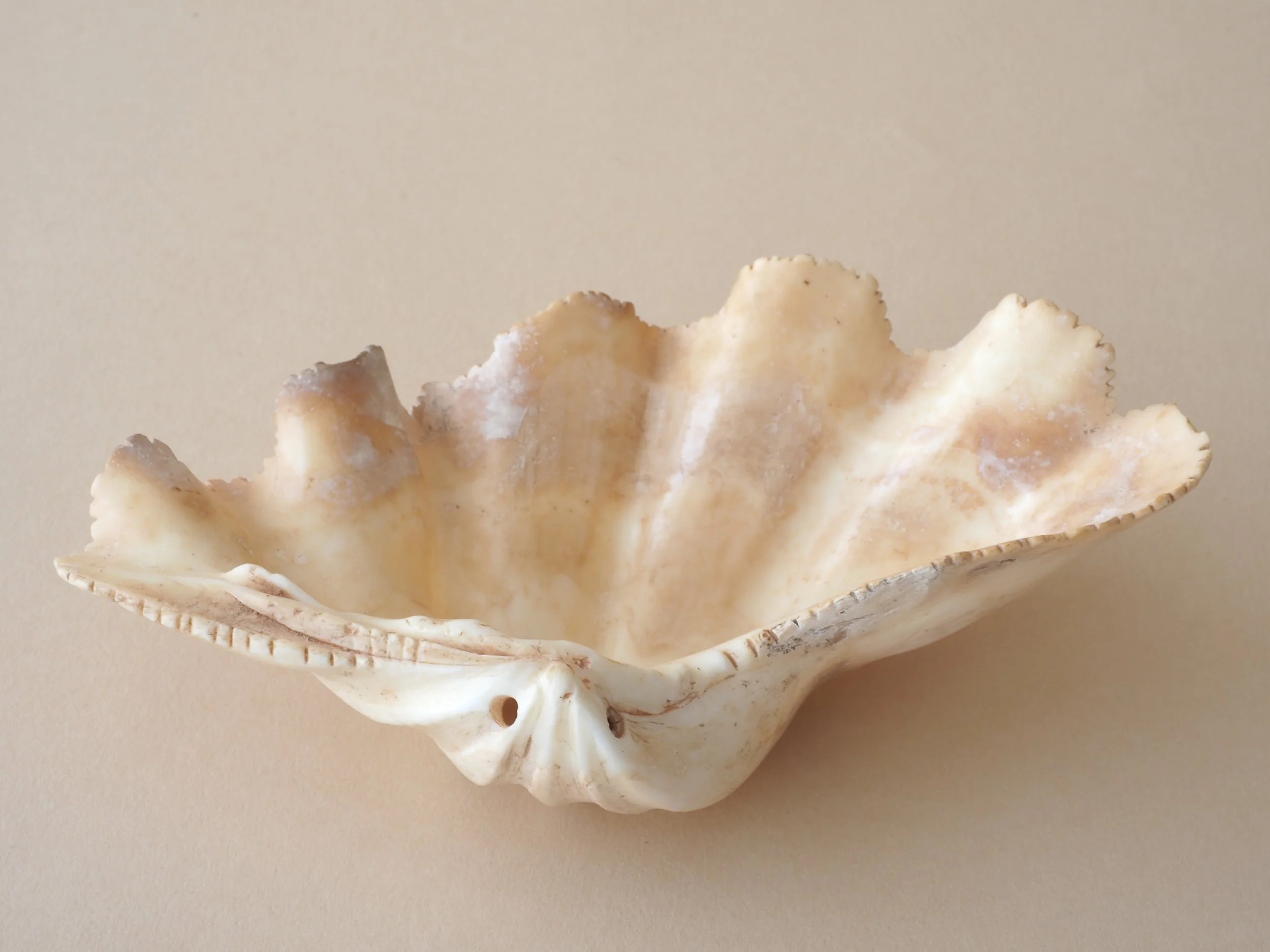
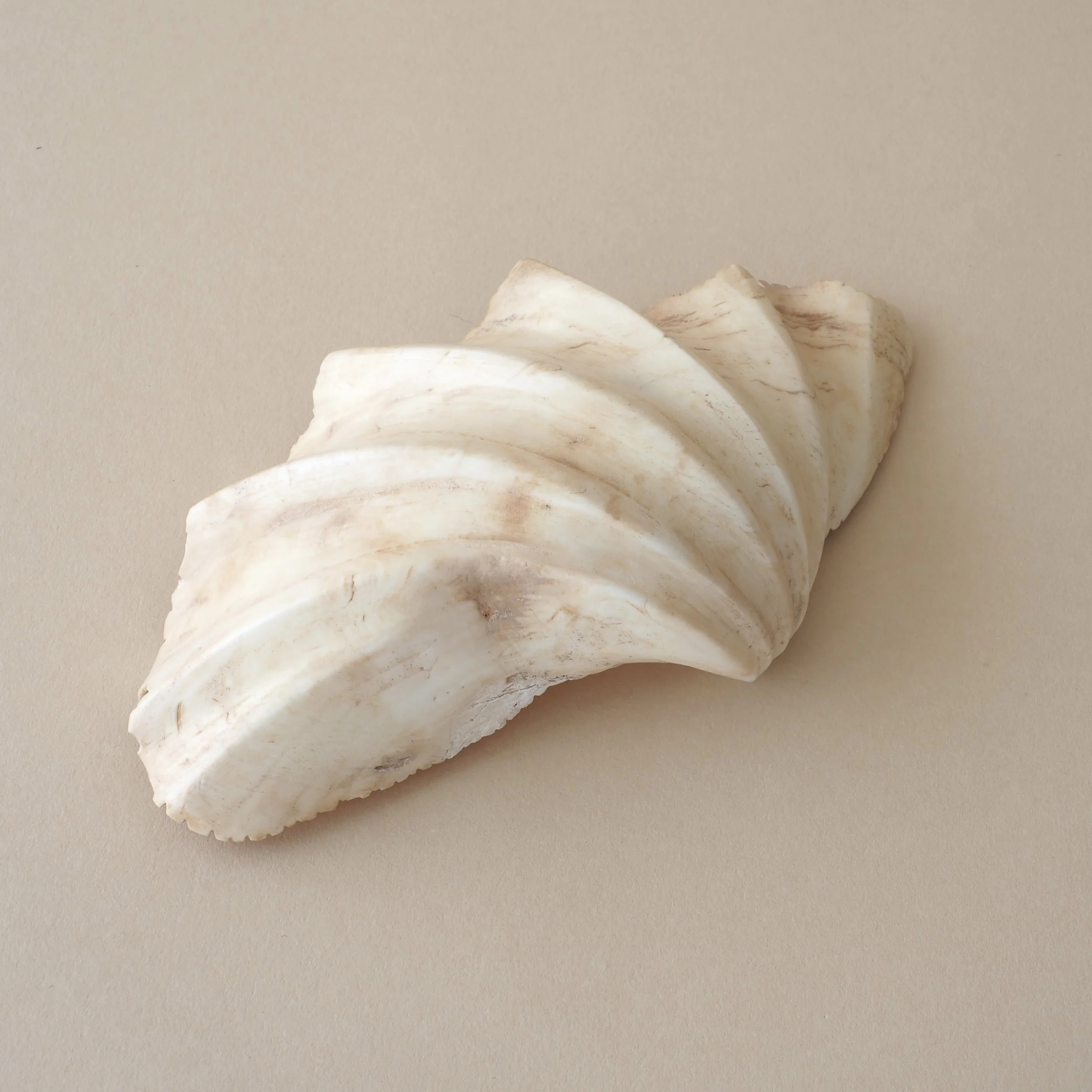
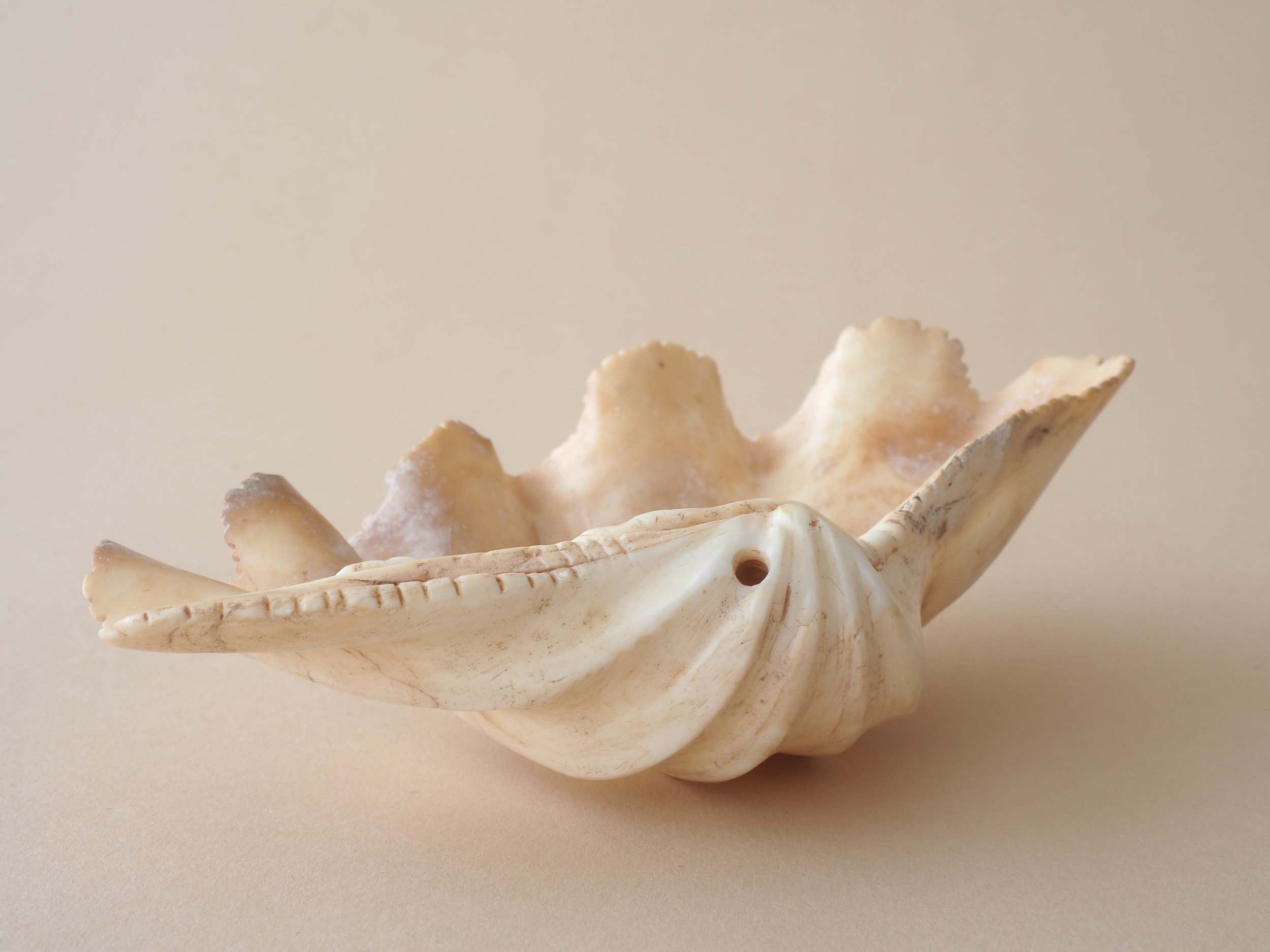
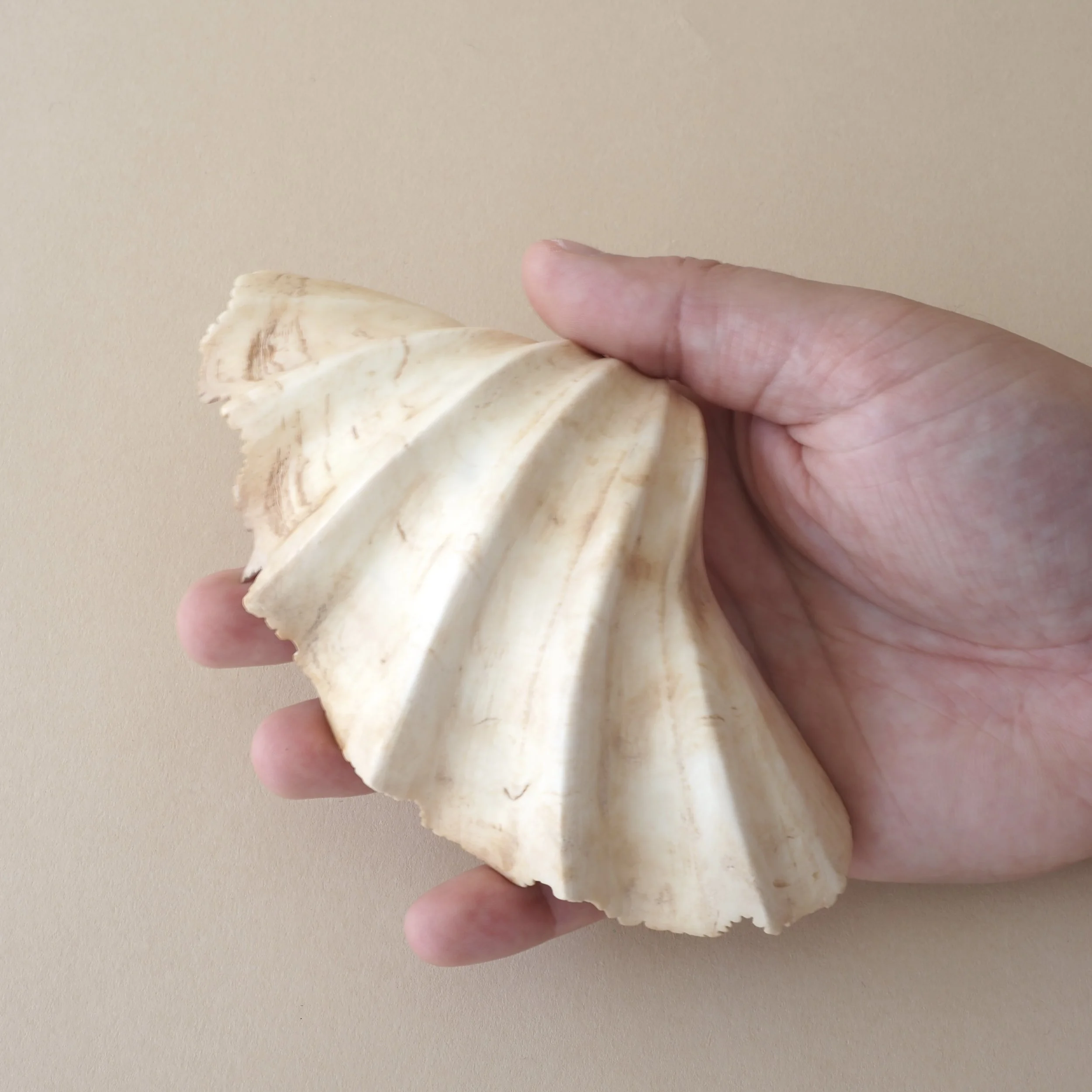
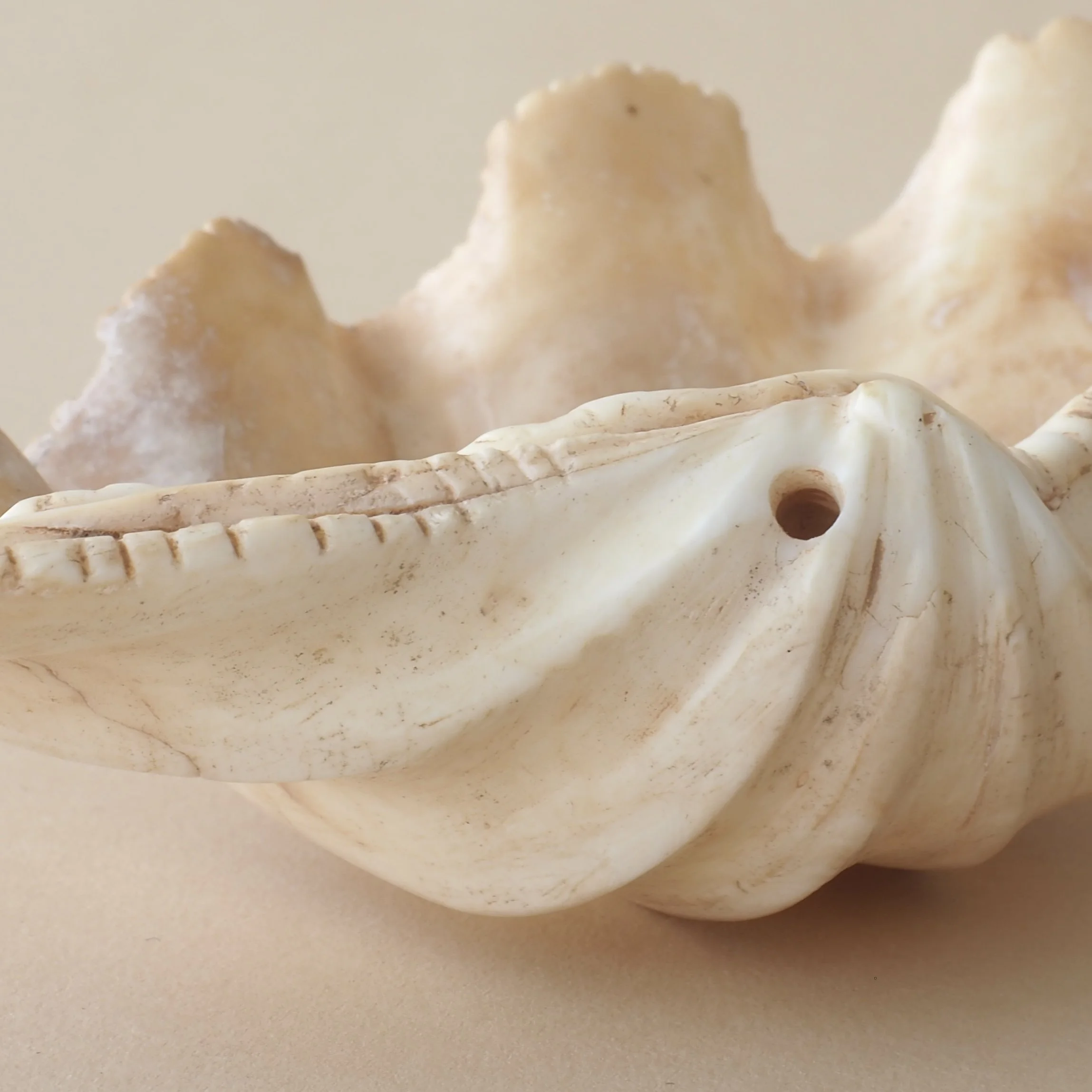
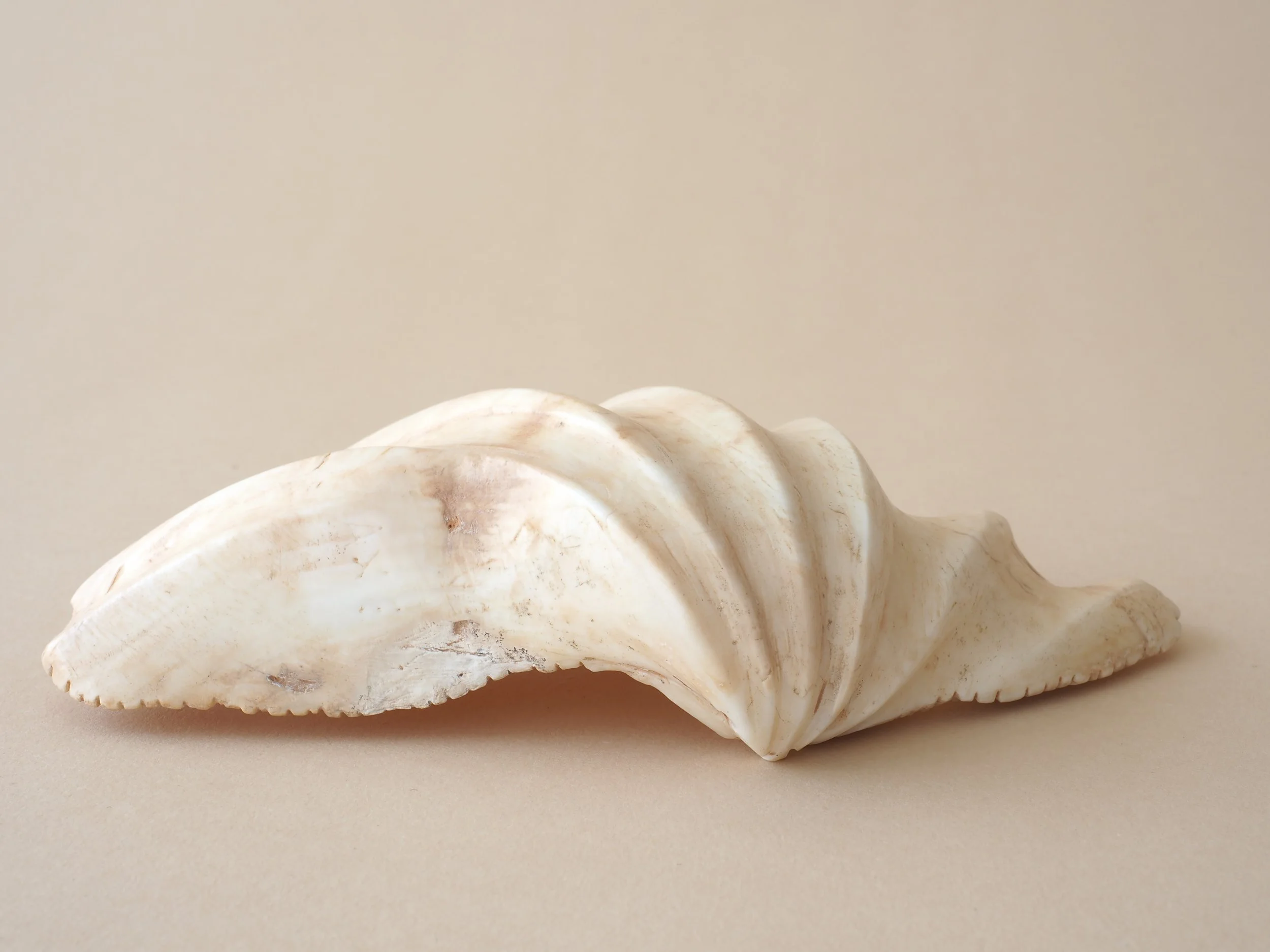
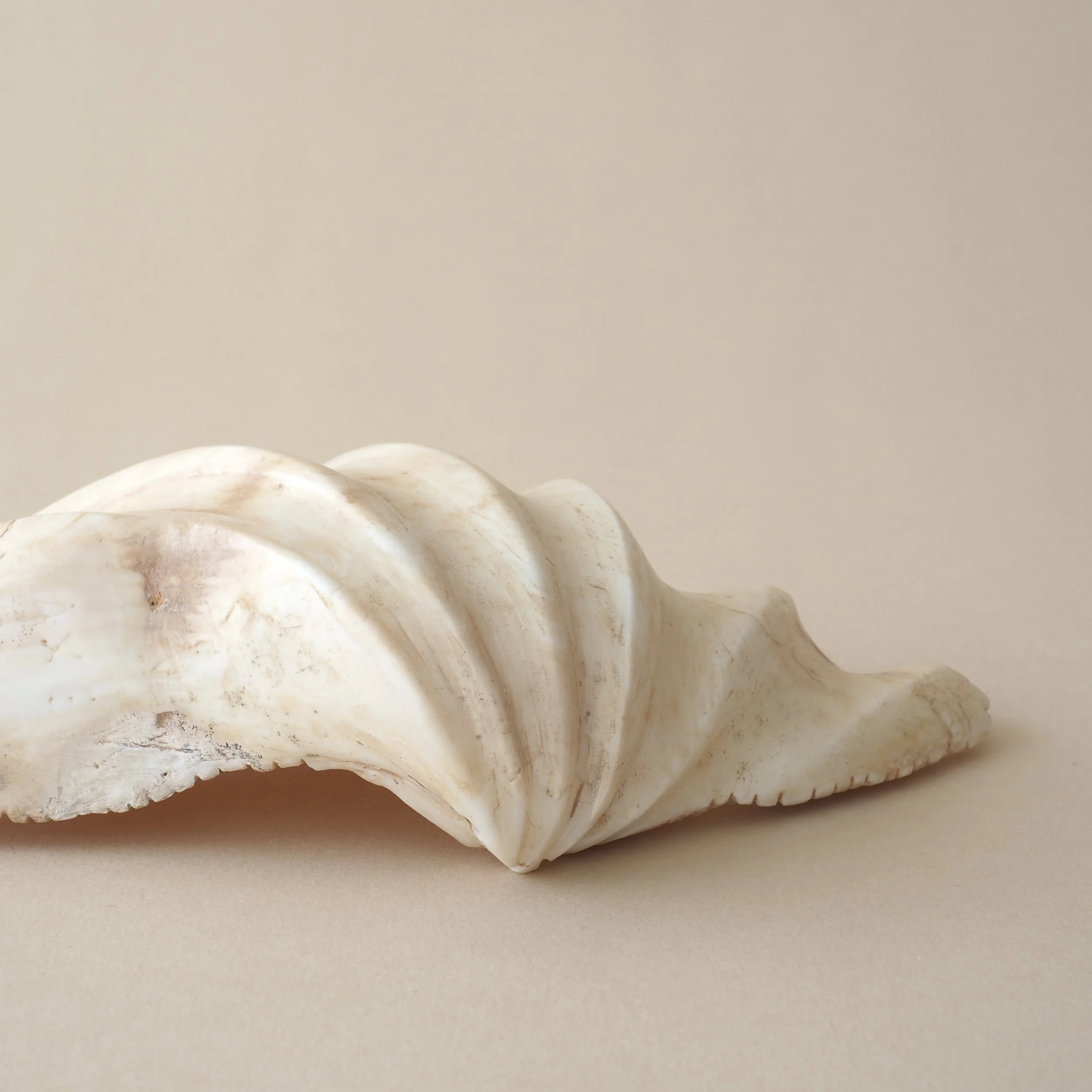
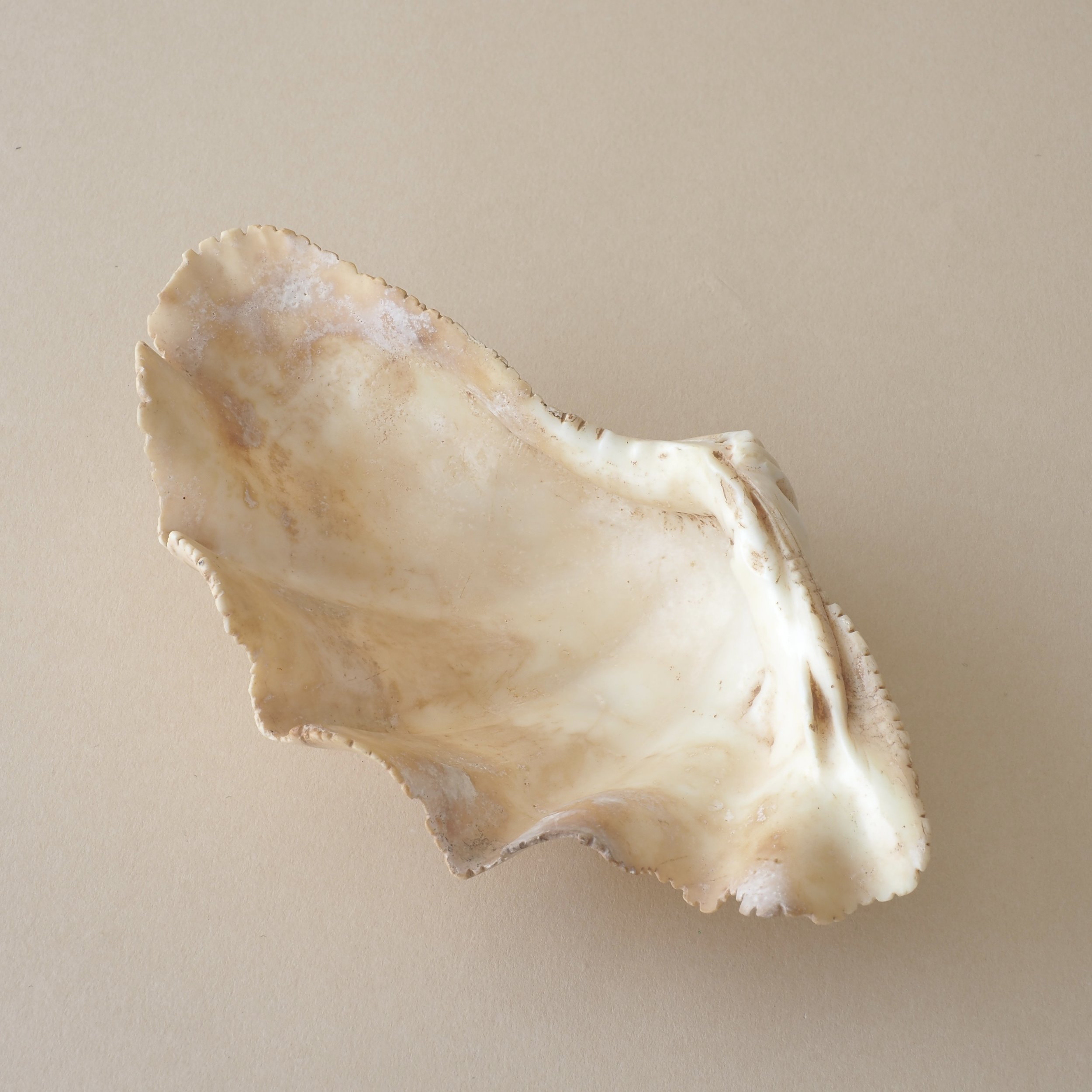
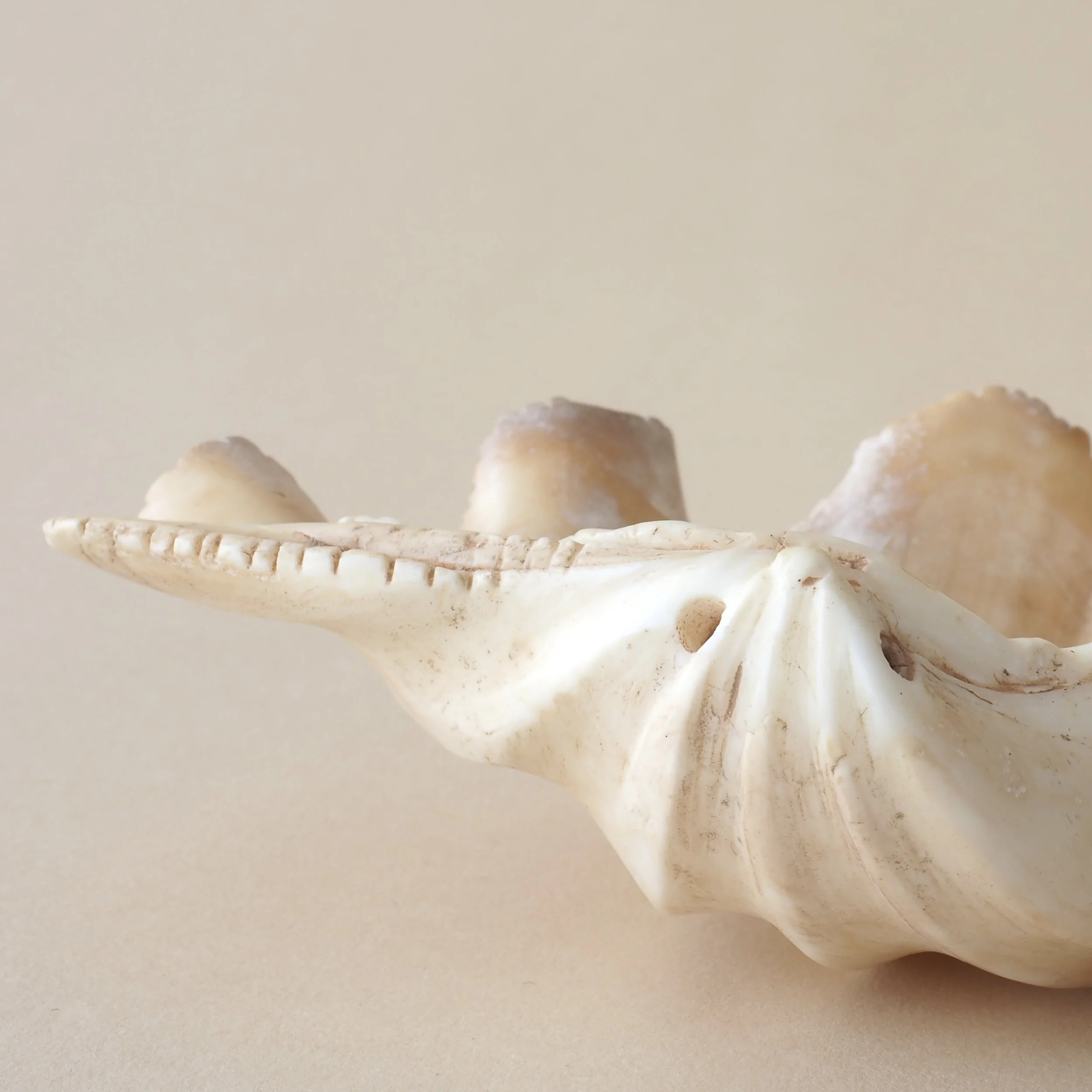
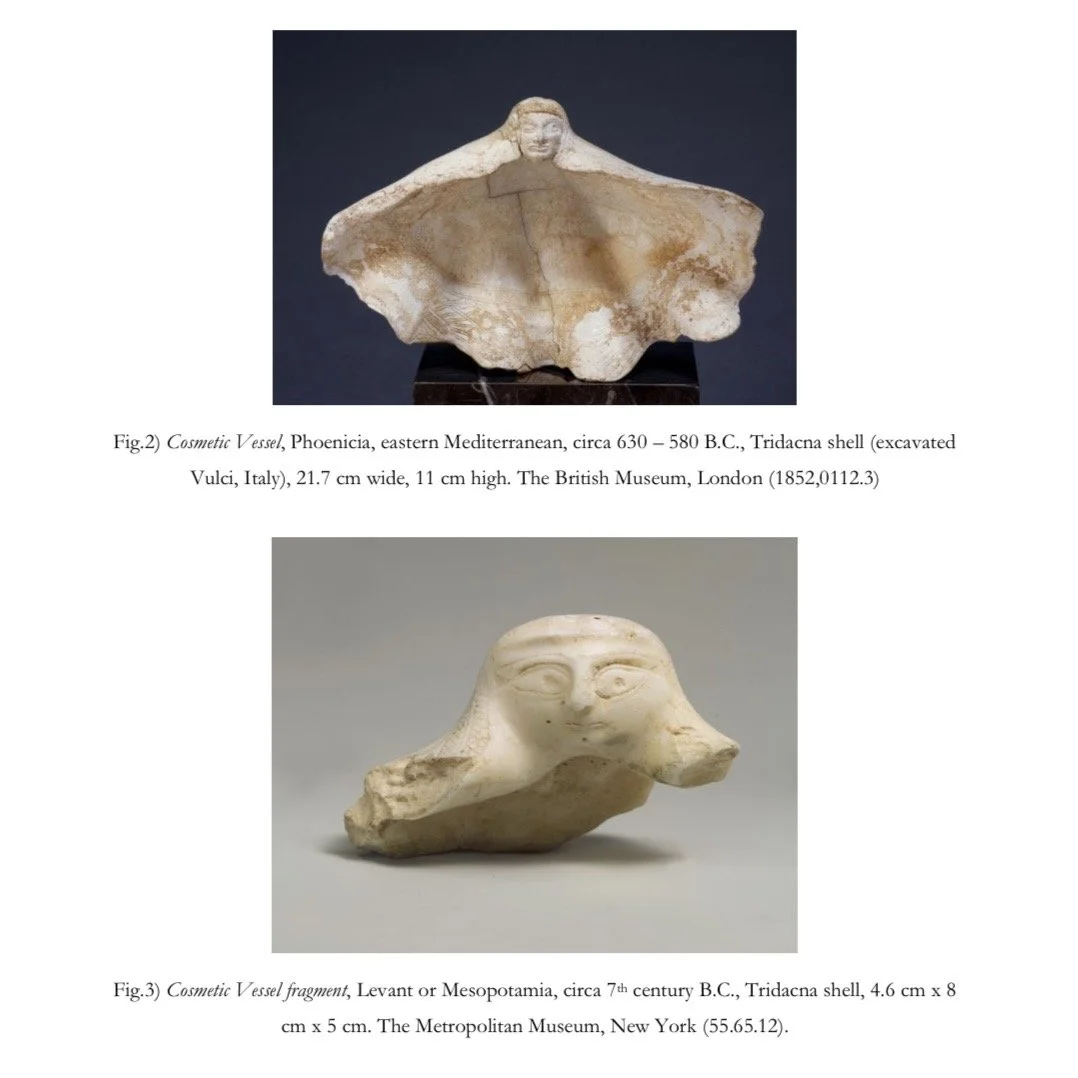
This subtle, anthropomorphically carved clam shell, represents an ancient iron age cosmetic vessel made in the Phoenician region of the eastern mediterranean, during the late 7th - early 6th century B.C. ie. after the Assyrian occupation the region, and before the Babylonians. Perhaps due to this short period of production, only around 100 of these objects have been found, mostly throughout the Near East and Mediterranean, but also as far west as Italy (i.e. The British Museum example 1852, 0112.3 - Fig.2). Tridacna clam shells themselves are native to the Indian Ocean, the Red Sea, and the Persian Gulf.
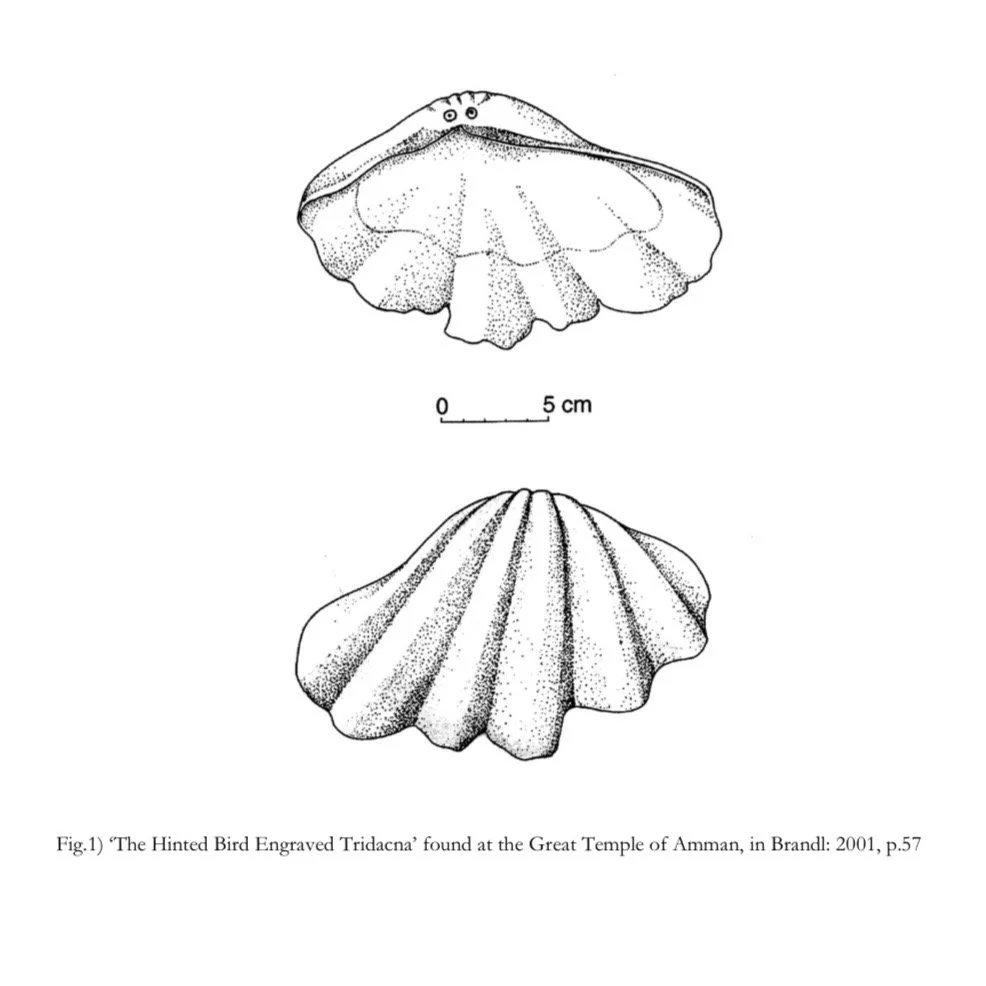
The present work finds a close comparison with a Tridacna maxima shell that has an umbo (apex) carved with 'eyes' and smoothed-down exterior (fig. 1). That object was found at the Great Temple of Amman, in modern day Jordan (Caubet and Poplin 1995: 492, n.21; Koutsoukou 1997: 147 - 48, n.185; Routledge 1997: 37, n.37, fig.7) and illustrated in Brandl (2001: fig.7, p.57).
The style of both works is characterised by minimal carving and Brandl suggests they are part of a group called 'The Hinted Bird Engraved Tridacna'. Brandl also posits that the engraved Tridacna industry grew out of the withdrawal of the Assyrian's from the Phoenician coast, as shells from the Red Sea would have then become available through agents in Egypt. However, the period of production was only brief, as it seems the Tridacna production centre in the region was destroyed 50 years later by the Babylonians. More heavily engraved examples exist in The British Museum (fig.2) and The Metropolitan Museum, New York (fig.3). Further examples can be consulted in the seminal, 1974 study of these objects by Rolf Stucky: The Engraved Tridacna Shells'.
Related literature
Brandl, B. 'Two Engraved Tridacna Shells from Tel Migne-Ekron', Bulletin of the American Schools of Oriental Research, The University of Chicago Press, Aug., 2001, No. 323 (Aug., 2001), pp. 49-62
Caubet, A., and Poplin, F. 'Le travail de l'os, de l'ivoire et de la coquille en Terre Sainte du Te au ler millénaires av. J.-C.?' Studies in the History and Archaeology of Jordan, V, eds. K. 'Amr, F. Zayadine, and M. Zaghloul, Amman: Department of Antiquities, 1995, pp. 489-95
Koutsoukou, A. Miscellaneous Finds, The Great Temple of Amman: The Excavations, by A. Koutsoukou, K. W. Russell, M. Najjar, and A. Momani, American Center of Oriental Research Occasional Papers 3. Amman: American Center of Oriental Research, 1997, pp. 135-56
Routledge, B. 'Mesopotamian "Influence" in Iron Age Jordan: Issues of Power, Identity and Value', Bulletin of the Canadian Society for Mesopotamian Studies 32, 1997, pp. 33-41.
Stucky, R. A. 'The Engraved Tridacna Shells', Dédalo 19. São Paulo: Museu de Arqueologia e Etnologia, Universidade de São Paulo, 1974