
 Image 1 of 1
Ancient Egypt, New Kingdom, c. 1300–1080 B.C.
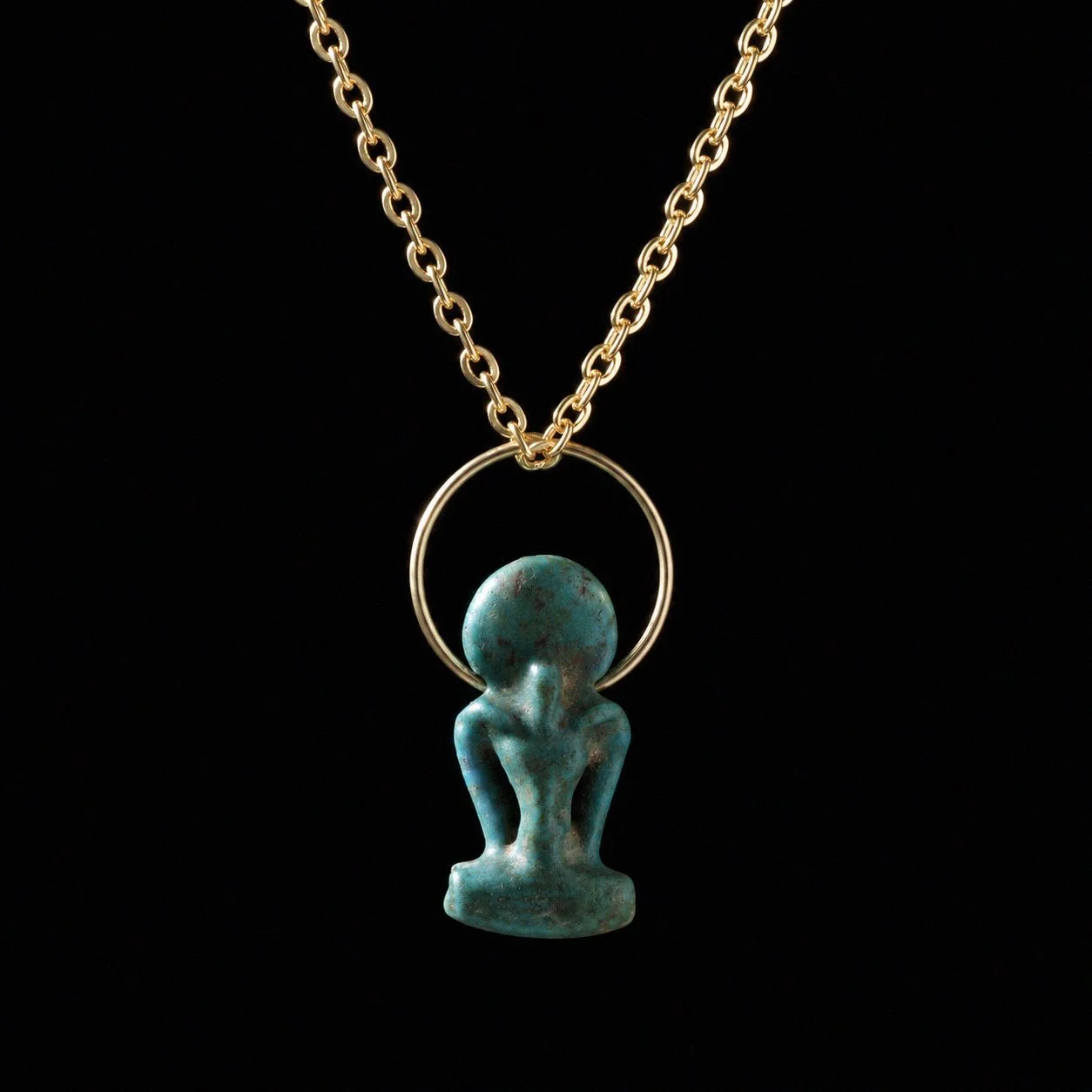
Amulet representing the head of Sekhmet, the lioness-headed goddess, wearing a solar disk and uraeus,
Faience,
With a 14 carat gold fixture on a gold plate chain,
Provenance:
Charlie Watts collection (drummer of the Rolling Stones) 1941 - 2021
This miniature faience amulet represents the head of Sekhmet, the formidable lioness-headed goddess of ancient Egyptian religion. Although the details have been smoothed over thousands of years of handling, we can see that the her leonine features are surmounted by a solar disk and uraeus, the rearing cobra emblematic of divine kingship, protection and royal authority.
Sekhmet, whose name translates as ‘the Powerful One’, was closely associated with the sun god Ra and was regarded as both a destructive and protective deity. As the fiery Eye of Ra, she embodied the scorching heat of the sun and possessed the power to unleash disease, warfare and devastation upon humanity. Conversely, she was also invoked as a goddess of healing, capable of averting the very afflictions she was believed to inflict.
The solar disk crowning her head emphasises her intimate connection with Ra, while the uraeus symbolises the divine fire through which she vanquished enemies and repelled malevolent forces.
Amulets depicting Sekhmet were worn as potent protective talismans, intended to harness the goddess’s formidable powers for the benefit of their owners. Fashioned in faience, a glazed siliceous material prized for its luminous colour and associations with regeneration, such objects combined religious devotion with the ancient Egyptian belief in the magical efficacy of divine images.