
Comte de Mirabeau
Jean-Antoine Houdon (1741 - 1828)
Defaced bust of Honoré Gabriel Riqueti, Comte de Mirabeau (1749 - 1791)
Terracotta, on a white marble socle,
1791,
Signed: ‘Houdon f(ecit)’
Dated: ‘10 Aout 1791’
91 cm high
64 cm wide
35 cm deep
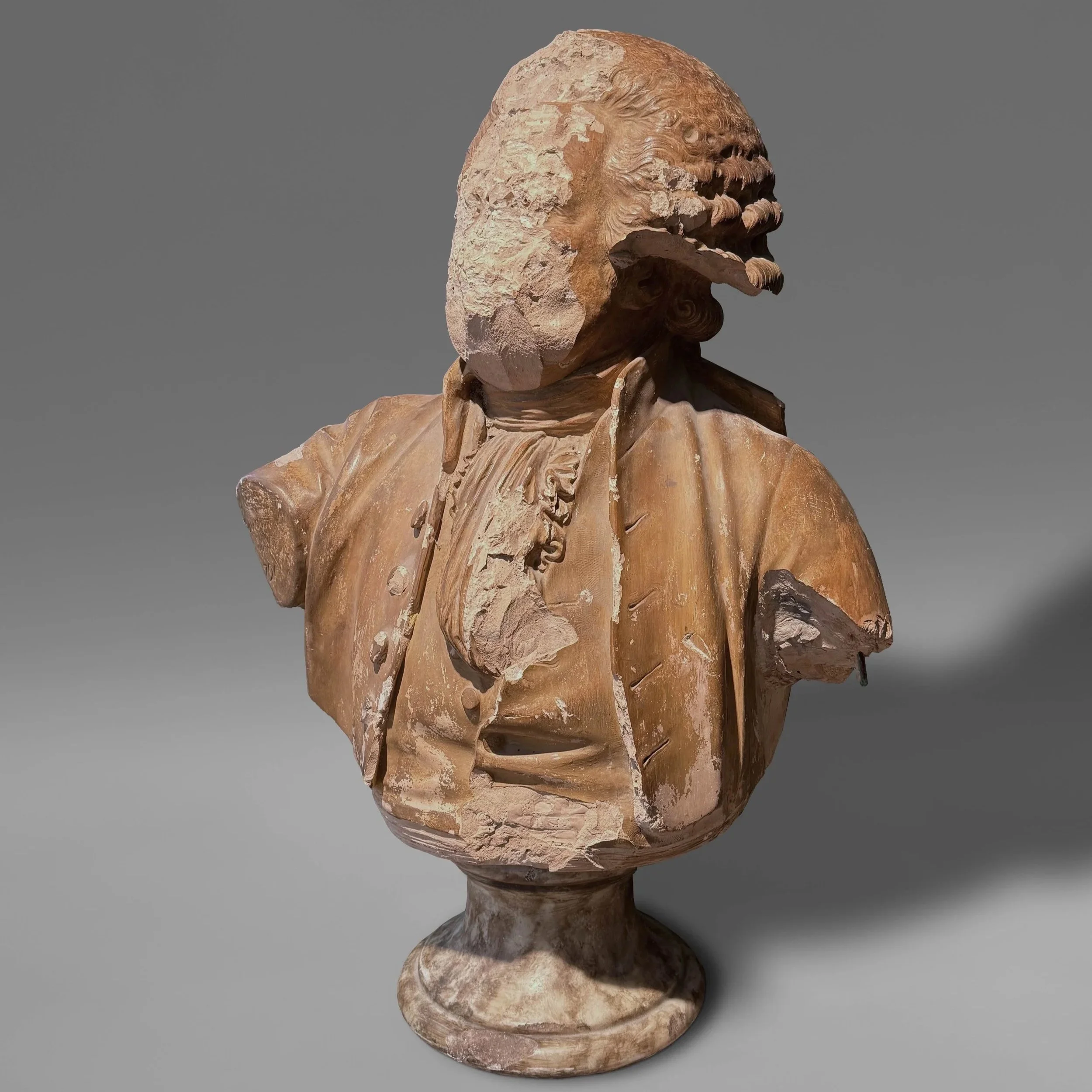
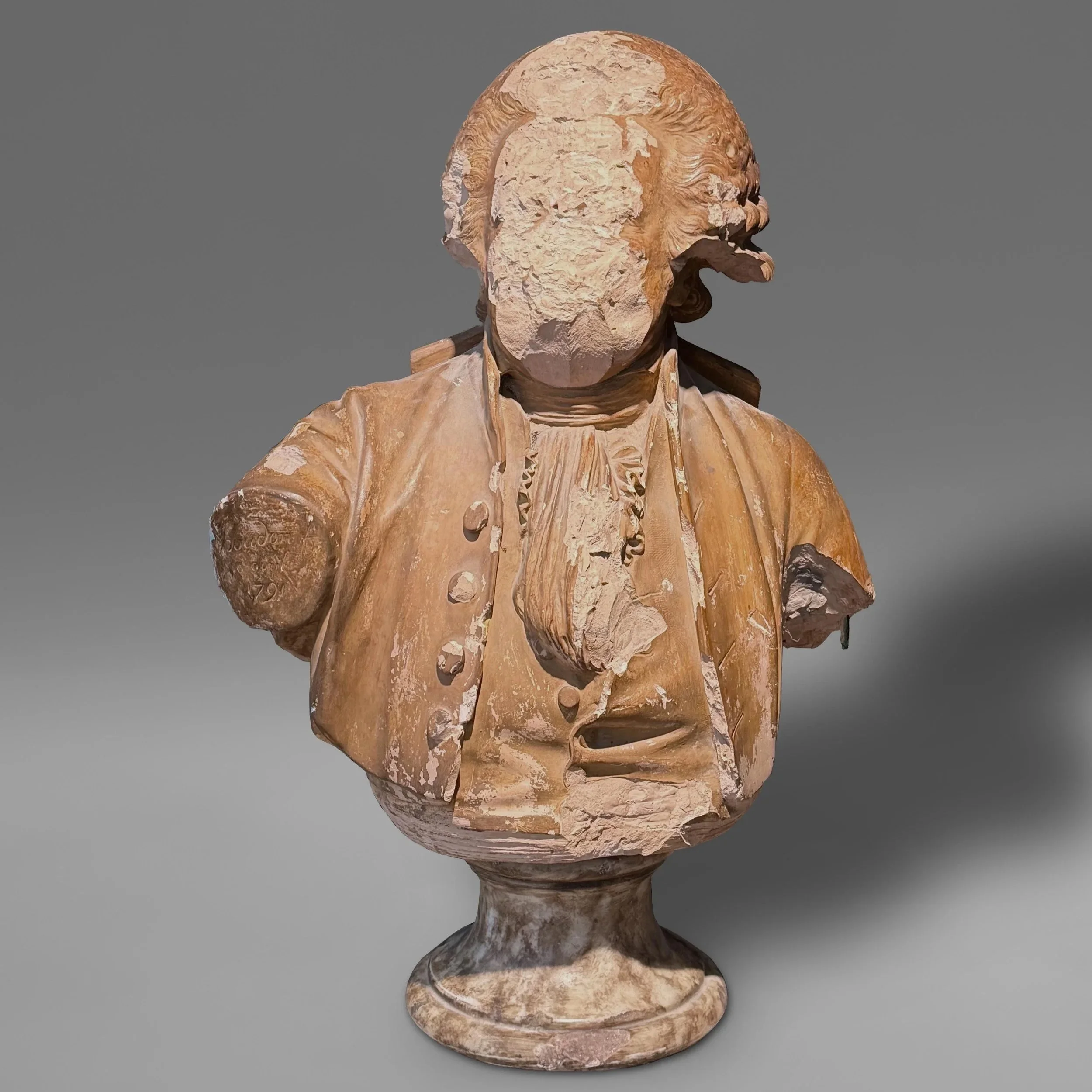
Modelled in 1791 at the height of French revolutionary fervour, this signed and dated terracotta bust by Jean-Antoine Houdon (1741 - 1828) depicts Honoré Gabriel Riqueti, Comte de Mirabeau, one of the most charismatic and controversial figures of the early Revolution.
This bust embodies Houdon’s celebrated naturalism as a sculptor and modeller in clay. From another surviving version (in marble), we can see that Houdon depicted Mirabeau with pursed lips, staring into the middle distance, chin raised and head turned slightly to his right. There is also a suggestion of his right arm being drawn theatrically aloft - as if captured in the midst of one of his famous oratorical displays before the National Assembly.
Created in the same year as Mirabeau’s death, Houdon’s bust belongs to that brief moment when he was hailed as a hero of constitutional reform and interred in the great Panthéon as a father of the nation.
However…the condition of the present version also betrays his fall from grace - for it has been quite deliberately defaced and disfigured in an unmistakable act of iconoclastic vandalism. This damage no doubt followed the shocking revelations of Mirabeau’s secret dealings with the crown, which resulted in his remains being expelled from the Panthéon in 1794. His image—once venerated—became a target of derision, anger and political violence.
Such an act transforms Houdon’s portrait into a document of political upheaval, reflecting the turbulent cycles of exaltation and repudiation that characterised France and its images: from the destruction of royal effigies in 1792, to the toppling of Napoleonic emblems in 1814.
In many ways, this work represents the power of public sculpture, which today still manages to offend and inspire political violence, iconoclasm and cancellation. As it was in the era of the French Revolution, our public monuments are contested sites of politics, power and social revolution.